Cascade Damage Mechanism Explained


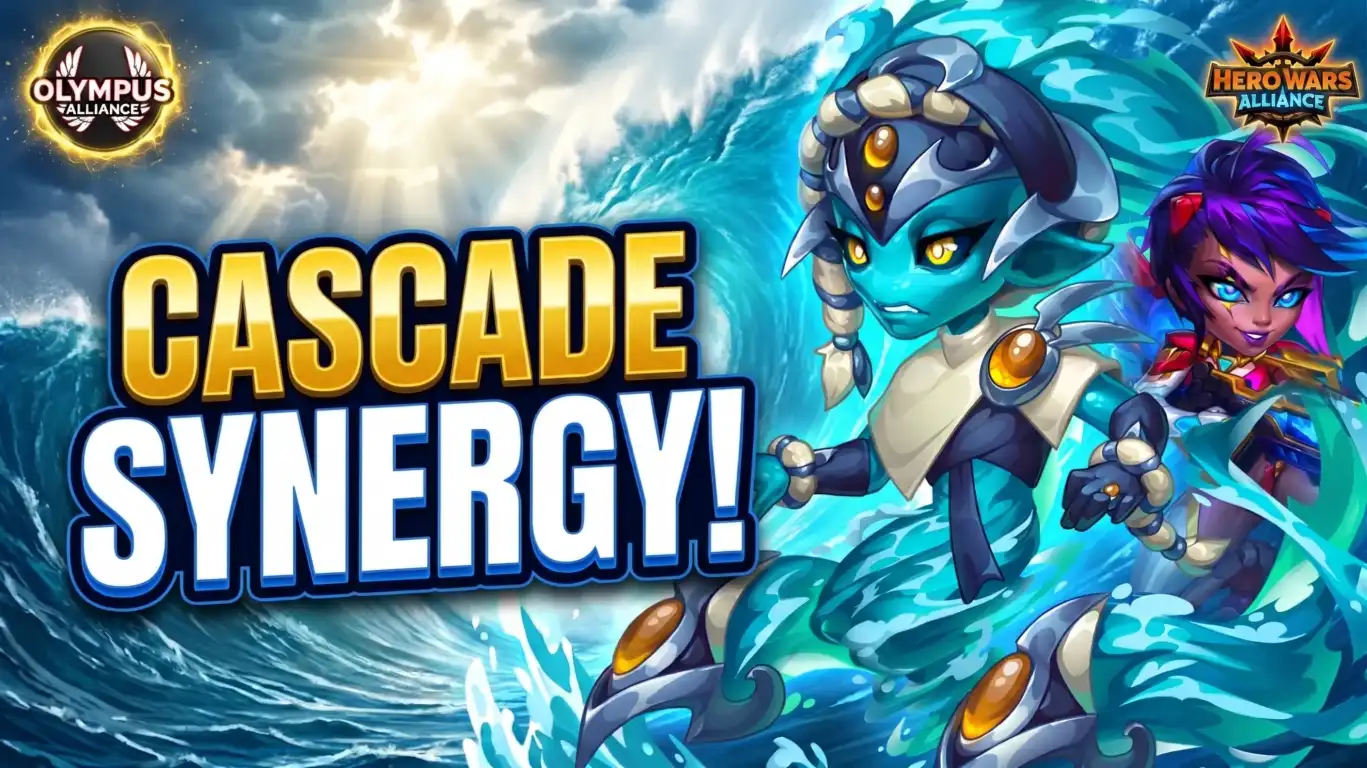
The Cascade Damage Mechanism is one of the most unusual setups ever given to a Marksman in Hero Wars Alliance. Picture a hero who targets the weakest defense of every opponent, strikes with both Physical and Magic Damage, and can even finish the sequence with Pure Damage. On top of that, he disrupts enemy formations and can silence an entire team.
Cascade is the Elemental Marksman who turns the power of water into a surprisingly sophisticated weapon. Still, his strength isn’t raw damage alone. What makes him dangerous is knowing when to strike, which defenses to break, and which allies help him reach his full potential. So let’s walk through his kit piece by piece, and then look at the partners who make it click.
Heavy Downpour: One Skill, Three Different Punishments
Cascade opens with Heavy Downpour, a powerful rainfall that damages enemies every second for four seconds. However, the most interesting part is what happens next, because the effect changes according to each target’s main attribute.
Every enemy belongs to one of those three categories, which means Heavy Downpour pressures an entire lineup in different ways at once. Against tanks, Cascade weakens their protection. Agility attackers, on the other hand, get Blinded, and that can interrupt their offensive pressure. Meanwhile, Intelligence heroes are Silenced, opening a window to act before they can use their abilities again.
That window matters more than it looks. For example, it can give your team time to recover, launch an ultimate, or punish enemies while they’re vulnerable.
Tidal Wave: Breaking Formations and Applying Sodden Armor
Cascade doesn’t just interfere with enemy abilities. He also interferes with their positioning.
The Knockback Dash
His tidal wave sends him dashing through enemy lines, dealing Magic Damage and knocking opponents backward. The knockback is stronger against nearby targets. After reaching the end of his dash, Cascade returns to a new position at the same distance from the furthest enemy as he had originally.
Why is that so valuable? Pushing enemies closer together makes area attacks considerably more dangerous. As a result, instead of hitting one target, your allies may catch several enemies in the same attack.
Sodden Armor
There’s another consequence of that tidal wave, and it’s called Sodden Armor. Enemies struck on Cascade’s return path receive this effect for eight seconds. Whenever an affected enemy takes damage, Sodden Armor deals additional damage of the same type. Better still, if the source of that damage is a Mystery faction ally, the extra damage increases.
Now imagine combining grouped enemies, repeated area damage, and those additional Sodden Armor hits. Suddenly, Cascade isn’t simply attacking. In fact, he’s setting up the entire team to deal more damage.
Elemental Surge: How the Cascade Damage Mechanism Works
His most distinctive mechanic is Elemental Surge, and it’s the heart of the whole kit. First of all, Cascade’s Magic Defense always matches his Armor Penetration. If one statistic changes during battle, the other changes with it.
His basic attacks are anything but ordinary, too. When an opponent has more Armor than Magic Defense, Cascade attacks with Magic Damage. Otherwise, he attacks with Physical Damage. In other words, he automatically picks the damage type aimed at the weaker defensive statistic.
That’s only the first step, though. Here’s the full Cascade Damage Mechanism sequence:
- Adaptive first hit: Magic or Physical Damage, chosen against the target’s weaker defense.
- Opposite second hit: if the first attack penetrates that defense, Cascade launches an additional attack of the opposite damage type.
- Pure Damage finisher: if the second attack also penetrates the relevant defense, he deals Pure Damage as well.
Why Many Players Underestimate Him
To get the most from Elemental Surge, you don’t simply stack damage and hope for the best. Instead, you need to understand enemy defenses and create the conditions for both attacks to penetrate. That’s why reducing an opponent’s defenses, or strengthening the relevant penetration support, can make an enormous difference.
Best Allies to Support Cascade
So which partners should you consider? Each of these heroes helps a different part of his kit.
Eva and Satori: The Offensive Partners
Eva’s interaction with Cascade’s regular attacks makes those projectiles far more threatening. For a hero who already has an unusual basic-attack mechanic, she’s an exciting offensive partner.
Satori, meanwhile, is a Mystery faction mage who brings area Magic Damage. That makes him especially interesting when enemies are grouped together and carrying Sodden Armor, since Mystery allies benefit from its increased additional damage.
Tristan or Orion: Picking Your Penetration Support
These two heroes solve different problems. Tristan provides Armor Penetration through his weapon artifact, so if a key target’s Armor is stopping Cascade from completing his damage sequence, that support becomes valuable. Orion, by contrast, provides Magic Penetration, offering another approach when Magic Defense is the bigger obstacle.
The point isn’t that one is always better. Rather, the right choice depends on the enemy defenses you’re trying to overcome.
Iris and Nebula: Defense Shred and Support
Iris can decrease enemy Magic Defense, which helps Cascade’s Magic Damage find its way through tougher targets. Because he adapts his attacks to defensive statistics, lowering those defenses is particularly worth exploring.
Finally, there’s Nebula. As a middle-line support, she can provide major offensive buffs, and that’s especially appealing for Cascade because his damage involves both Physical and Magic attacks. She also removes negative effects, giving him extra protection when the opposing team tries to disrupt him.
Turning the Kit Into a Strategy
This is the central lesson: Cascade is not a traditional Marksman you build around a single damage statistic. He brings crowd control, formation disruption, defense reduction, additional damage through Sodden Armor, and an unusual chain of basic attacks. Ultimately, the Cascade Damage Mechanism only shines when those pieces connect.
Pair him with heroes who exploit grouped enemies. Next, consider Mystery allies who can take advantage of Sodden Armor. And before deciding which penetration support helps most, pay attention to the opponents’ defenses. That is how you turn an interesting kit into a coherent strategy.
So, Guardians, have you been overlooking Cascade? Would you build around Eva and Satori, bring Tristan or Orion for penetration, or explore Iris and Nebula? Tell us which combinations have worked for you and which ones deserve more testing, because your experience could help other players discover something new.
More Hero Wars Alliance Guides
- Happy Birthday Hero Wars Alliance Event Guide
- Helios in Hero Wars Alliance
- Mushy Relics Breakdown
- F2P Gear and Glory Guide
Join the Olympus Alliance Discord
Share your Cascade combos, compare notes on penetration support, and get help from other Guardians.