
Hero Wars Rufus Explained 2026


Hero Wars Rufus explained in one sentence: he is a tank that magic simply cannot kill. That’s not exaggeration, either. Rather than shrugging off spells or clinging on with a sliver of health, Rufus stands right back up whenever the killing blow is magic or pure damage. In this guide, we break down exactly how his kit pulls that off, how to build him properly, and whether he actually deserves a spot on your Hero Wars Web team.
Who Is Rufus in Hero Wars?
On paper, Rufus is a strength tank who sits right in the heart of your frontline. Better still, he isn’t locked behind some rare event, since you can pull him from the Grand Arena shop, soul chests, and the Atrium right now. Ironically, that easy access is exactly why so few players respect him. At a glance he looks like a boring wall, a body you throw up front to soak a few hits. In reality, though, Rufus is a specialist wearing a wall’s armor, and once you understand what he specializes in, he stops looking boring very fast.
The Twist: A Strength Hero That Scales on Magic
Here’s the detail that runs through his entire kit. Although Rufus is a strength hero, almost nothing he does actually uses strength the normal way. Every strength point he gains from skins, artifacts, and glyphs converts into roughly 40 health and 1 physical attack, and that physical attack just sits there unused. That’s because his skills don’t scale off physical power at all; instead, they scale off his magic attack.
In other words, this one detail separates players who simply own Rufus from players who actually get value out of him. Keep it in mind, because it shapes everything from his synergies to his build.
Hero Wars Rufus Explained: Skill-by-Skill Breakdown
Before diving into each ability, here’s a quick overview of what Rufus brings to a fight.
Rakashi’s Barrier (Ultimate)
This is the skill that carries his defensive reputation. When his ultimate fires, Rufus throws a shield over the entire team that absorbs all incoming magic damage, with a capacity of over 340,000. Crucially, it isn’t just personal protection, because it covers the whole squad. Think about the glass-cannon carry in your backline who normally gets deleted by an enemy mage: for those few seconds, the magic simply hits the barrier and dies there.
On top of that, the barrier fires alongside his artifact, Rakashi’s Shield, which grants the whole team a hefty armor bonus for nine seconds (over 50,000 armor at max). As a result, Rufus shores up the physical side at the same time.
Devourer of Magic (Blue Passive)
Then things get greedy. His blue passive, Devourer of Magic, converts 65% of everything that shield absorbs straight into Rufus’s own health. In a real fight, that’s comfortably 200,000 or more, and it climbs even higher with magic-attack support behind him.
Read that again: the harder the enemy hammers your barrier with magic, the more Rufus heals. Your opponents think they’re bursting your team down, yet they’re really just feeding your tank. Ultimately, the whole engine reverses on them, and their only option is to keep casting and keep losing.
Rakashi’s Oath (Violet Skill)
Next comes the skill everybody knows him for. Thanks to Rakashi’s Oath, Rufus can only be killed by physical damage. If the final hit that drops him is magic or pure, he doesn’t die; instead, he resurrects with a huge slice of health restored, scaling well past a million with the right support.
Consequently, a full magic composition (a team built entirely on mages and pure-damage finishers) has no answer to him. They can pour everything they own into Rufus, and the game simply refuses to let him stay down. Against those teams, he isn’t just hard to kill; he’s unkillable.
Rakashi’s Mockery (Green Skill)
However, this is the part most players completely sleep on, and it’s the reason Rufus is more than a defensive brick. His green skill, Rakashi’s Mockery, strikes the enemy with the highest magic power (usually their main carry) with pure damage over time.
At first glance, the base damage looks modest at around 50,000, so it’s easy to ignore. Because Mockery runs on his magic attack and deals pure damage, though, it goes nuclear with the right scaling. For example, pair Rufus with Nebula and run Albus as his patron pet, whose Pure Victory boosts his pure damage by 75%, and each tick balloons until the damage over time stacks into the hundreds of thousands. Built right, he’s a wall that also happens to be one of your damage dealers.
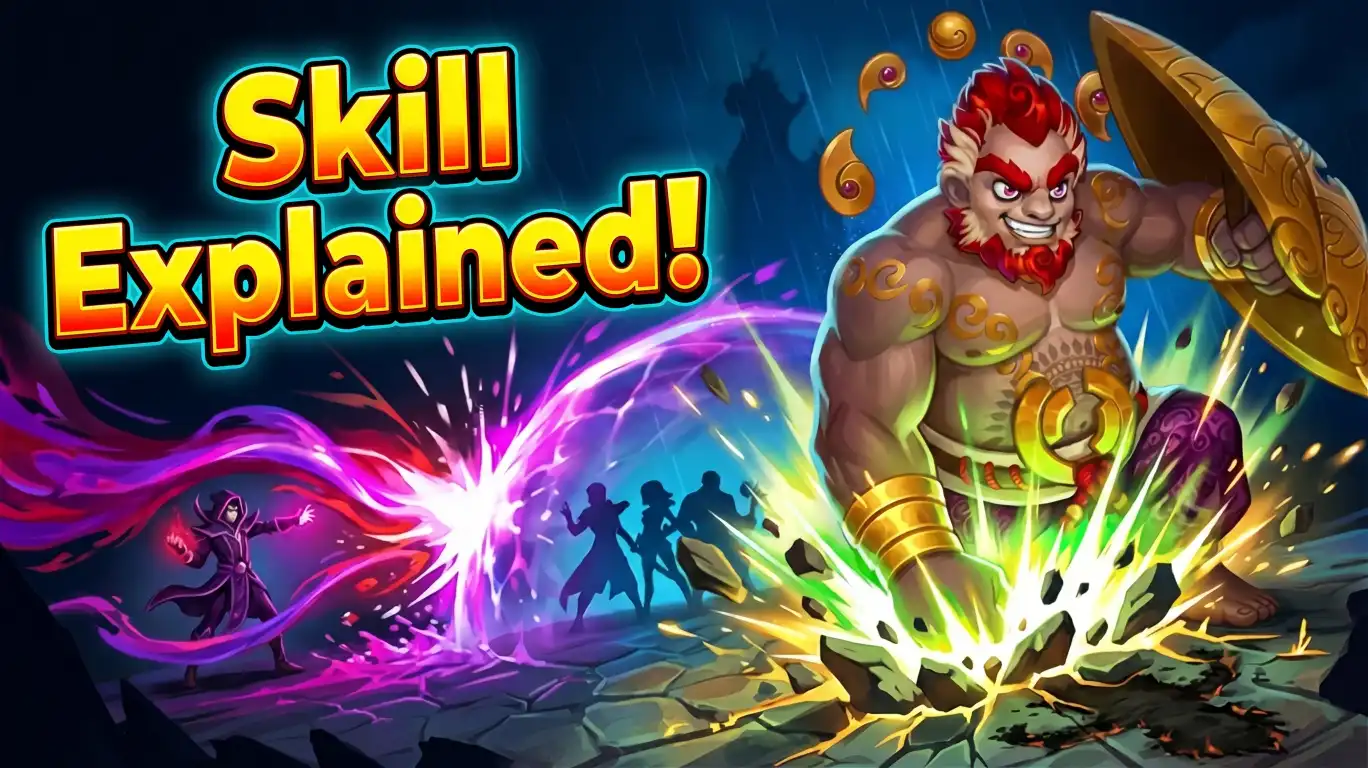
Best Synergies: Nebula, Albus, and Magic-Attack Support
Nebula is the thread tying his whole ceiling together. Her Equilibrium skill pumps his magic attack, and since everything Rufus does keys off magic attack, she scales all of it at once: a bigger barrier, a bigger self-heal, a bigger resurrect, and a scarier Mockery. In fact, the barrier alone can gain up to 200,000 extra capacity from her.
The one catch is positioning. Your damage dealers usually sit in front of Nebula, which makes reaching Rufus awkward. If she doesn’t fit your lineup, then heroes carrying magic-attack artifact bonuses, such as Satori, Celeste, Jorgen, or Lian, can pick up the slack and feed his scaling instead.
Meanwhile, Albus remains the go-to patron pet, since Pure Victory’s 75% pure damage boost is what turns Mockery from a tickle into a real threat.
How to Build Rufus: Glyphs, Artifacts, Skins, and Skills
So how do you actually build him? Against the grain, exactly as the twist suggests, and this is where getting Hero Wars Rufus explained properly really pays off. Since magic attack decides how big the barrier gets and how hard Mockery hits, his glyphs go into magic attack first rather than the usual tank spread.
Pushing Rakashi’s Oath early matters because it hardens the resurrect that makes him so miserable to kill. In short, players who slap pure tank stats on Rufus and call it a day are only getting half a hero. Build him as the secret magic-scaler he really is, however, and you unlock the whole kit.
Is Rufus Good in the Foundry (Clash of Worlds)?
The Foundry in Clash of Worlds is a use case plenty of players ask about, and Rufus works a little differently from the usual Foundry names. That fortification grants max health per tank, and heroes like Corvus and Electra abuse it because their kits scale directly off health. Rufus, on the other hand, draws his power from magic attack, so the Foundry buff doesn’t make his abilities hit any harder.
Even so, he offers two things worth your attention. First, he’s a tank, so simply fielding him helps power the Foundry for the health-scaling heroes beside him. Second, and this is the good part, the raw health boost patches his single weakness. Since Rufus can only be killed by physical damage, a much bigger health pool means physical attackers have far more to chew through. In other words, you’re not making his kit stronger; you’re making the one door into him much heavier to kick down.
When Rufus Shines (and When He Doesn’t)
Rufus is a counter-pick, not a generalist. He’s at his most terrifying in Arena and Grand Arena when you’re facing a magic-heavy enemy team, especially comps built around a big magic carry and pure-damage finishers. Drop him in, and their entire win condition evaporates while half their roster heals your side and Mockery burns down their mage.
On the flip side, the honesty cuts both ways. Against a physical team, all that magic-eating machinery does nothing: the shield doesn’t stop a sword, and the resurrect means nothing when they’re killing him physically anyway. In those match-ups, he’s just an average tank pointed the wrong way.
The Hard Counter: Cascade
There’s one more counter worth knowing, because it’s the cleanest answer to everything above. Cascade’s ultimate drops a downpour that prevents enemies from being resurrected while it lasts, and Rufus’s entire immortality is a resurrection. With that switched off, a magic hit that would normally revive him simply kills him instead.
Worse still, the same rain cuts healing, which throttles his self-sustain at the same time. Granted, it only lasts while the rain is out, so the timing has to line up. Still, the lesson is simple: if the enemy is running Cascade, Rufus is a risky hero to lean on for that fight, because his signature trick gets turned off at the worst possible moment.
Final Verdict: Is Rufus Worth Building?
Now that we’ve got Hero Wars Rufus explained from top to bottom, here’s our take. If magic teams keep giving you grief, Rufus is well worth pulling out of the Atrium and building properly, magic attack and all. If your problem match-ups are mostly physical, though, resources are better spent elsewhere, with Rufus kept in your back pocket for the day that changes.
Either way, stop seeing a boring wall. He’s a hard counter in a tank’s armor, and against the right enemy, nobody does the job better. So which magic team keeps wrecking your defense? Tell us on Discord, and we’ll help you figure out whether Rufus is your answer.
More Hero Wars Guides
Join the Hero Wars Olympus Discord
Share your Arena defenses, ask about Rufus builds, and get help countering the magic teams giving you trouble.