Draft Legend Guide: Hero Wars Alliance

Introduction:
In the world of Hero Wars: Alliance, few modes combine skill, patience, and luck quite like Draft Legends. This feature has become one of the most rewarding free-to-play opportunities in the game, giving players a true test of their strategy and decision-making. Whether you’re just starting out or pushing for the top of the rankings, this Draft Legend Guide Hero Wars Alliance will help you understand how to climb, adapt, and thrive without spending a single emerald. Read full Draft Legend Guide
From smart match timing to counter-picking and team synergy, every choice in this mode matters. The journey to the Legends League is not about brute force but about reading your opponents, anticipating their moves, and responding with perfect precision. Let’s dive deeper into everything you need to know to conquer this mode and claim those blue spheres.
The Basics: Draft Legend Guide
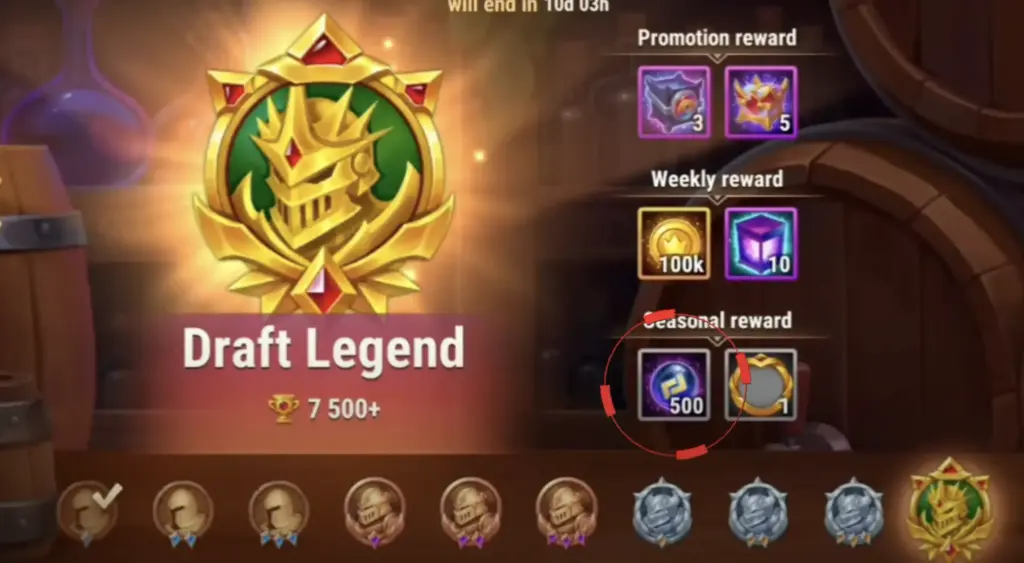
Draft Legends stands out as a truly rewarding experience for free-to-play players. When you reach the Legends League, you earn 500 blue spheres, and even the free line of the pass provides solid rewards. This mode is widely considered one of the best F2P sources of valuable resources in Hero Wars: Alliance.
Many Guardians stop after reaching the Legends League, and that’s perfectly fine — the blue spheres alone make it worthwhile. However, if you aim to climb even higher, you’ll need to play smarter, not just harder. Success here comes from strategy, patience, and understanding how the system works.
Overall Strategy: Draft Legend Guide
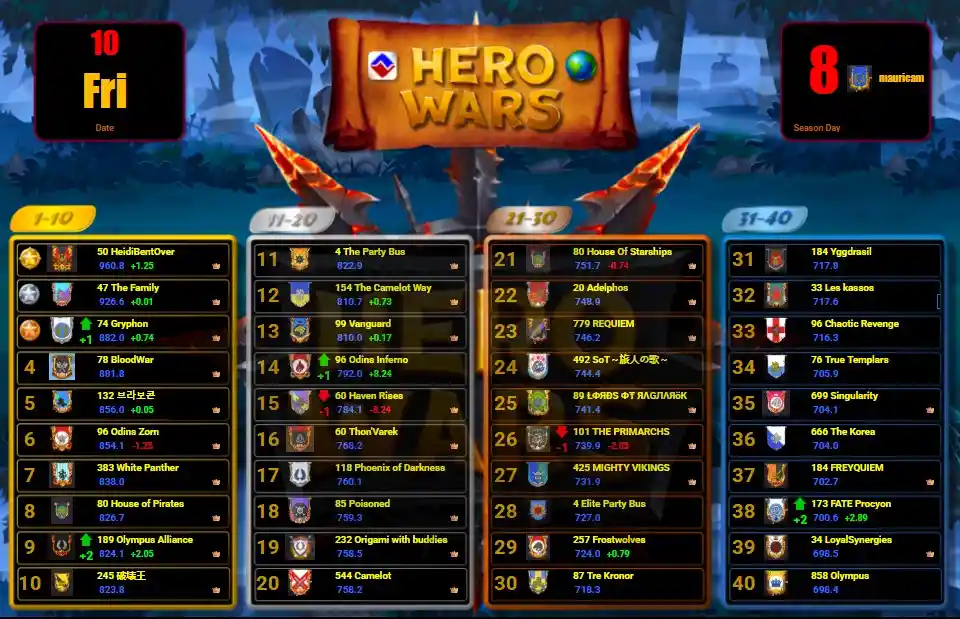
Draft Legends operates on an ELO-based system, which matches you with opponents close to your current rank. If the matchmaking system can’t find one immediately, it starts expanding its search range — and that’s where the danger begins. Facing opponents far below your rank gives almost no gain for victory, yet the penalty for losing can be significant.
That’s why one of the smartest habits you can develop is simple but powerful: if your match doesn’t find an opponent within two or three seconds, cancel and retry. This small adjustment helps you avoid unfair matchups and keeps your progress safe.
As you approach the top ten, patience becomes your best weapon. Instead of rushing into battles, save your attempts for the final hours when the competition settles. Allow others to take the risks while you plan your perfect strike. Then, when the moment comes, attack strategically to secure your spot among the Legends.
Defence Strategy: Draft Legend Guide
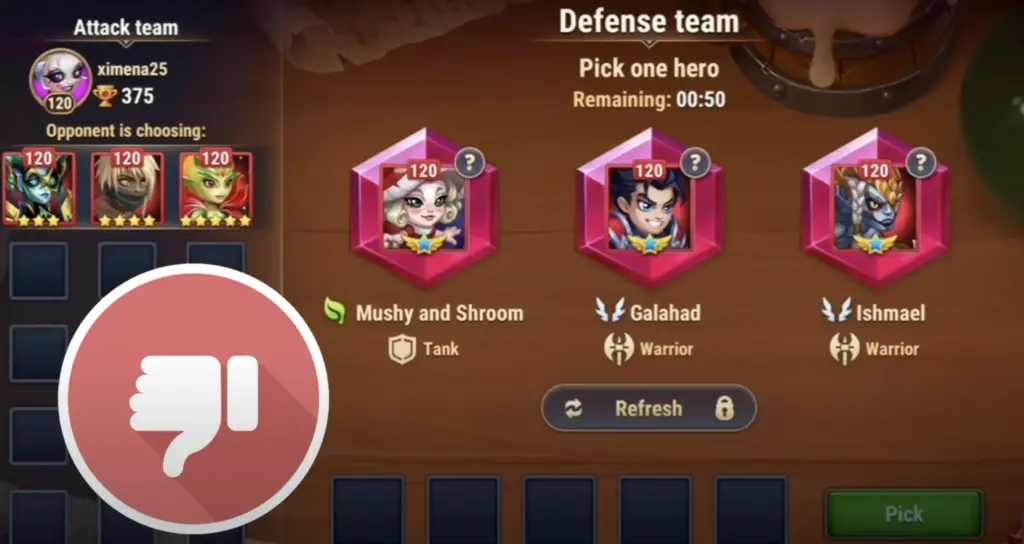
In Draft Legends, your defence defines your stability. Every successful climb depends on how well you anticipate your opponent’s pool and react to their potential picks. Always take a moment to study the options before locking in your choices.
If you notice heroes like Iris in your opponent’s setup, consider countering with Corvus or Octavia. When Astrid appears, Iris becomes a powerful response. And if Octavia shows up, Polaris is the hero to think about.
Often, stacking tanks and healers provides more consistency than trying to overpower your opponent with damage. When you face less ideal draft options, look for synergy — for example, if you already picked a hero with magic penetration, choose Kai or Krista to strengthen that path.
When your early picks lean offensive, shift your defence to a more resilient formation. On the other hand, if your initial setup looks defensive, use your offence picks to apply pressure. The key idea is to control the tempo and let your strongest heroes handle the fight while you maintain momentum.
Reliable defensive auto picks include Corvus, Astaroth, Julius, Aidan, Cascade, Guus, Folio, Satori, and Mushy. Each of these heroes either delays enemy attacks, counters popular DPS choices, supports both physical and magical synergies, or delivers sudden bursts of offense that can shift the battle.
For situational counters, Amira is excellent against Iris, Polaris works well against Octavia, Somna is effective versus Kayla or Peech, and Lian provides consistent charm control. Moreover, when the enemy lineup leans heavily into magic, heroes like Rufus, Tempus, and Morrigan can completely shut down their momentum.
Offence Strategy: Draft Legend Guide
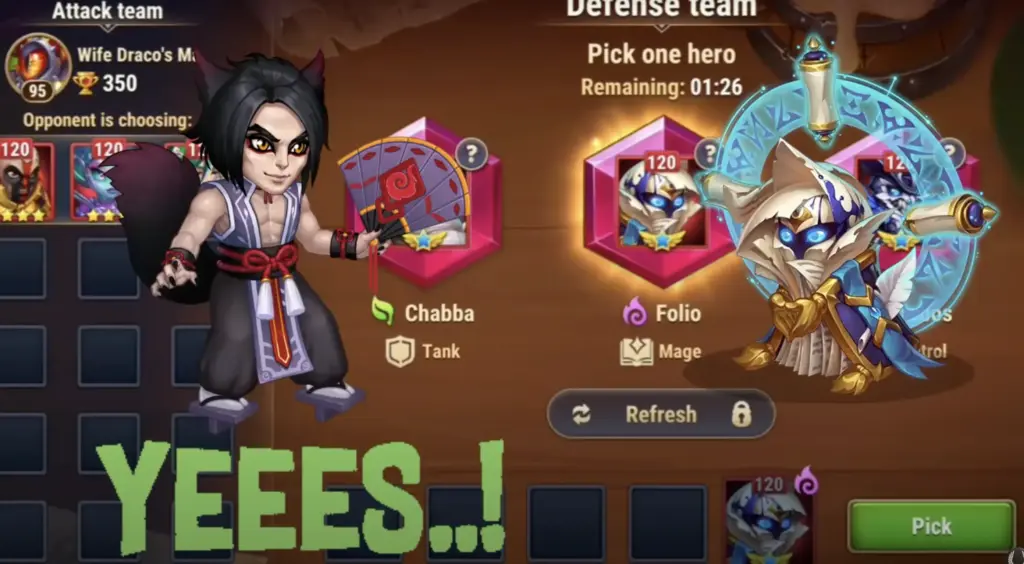
When it’s your turn to attack, your mindset must shift from patience to precision. Offence in Draft Legends rewards calculated risk-taking and synergy-driven decision-making. Watch your opponent’s picks carefully, because every hero they choose reveals a fragment of their plan — what they’re trying to build or what they’re trying to counter.
A well-coordinated offensive team can break through even solid defensive lines. If your initial draft presents Tristan, Julius, and Astaroth, lean into a physical synergy centered on Tristan’s power. On the other hand, if your first picks include Mushy or Orion, commit fully to a magic-based composition and build your support heroes around that core.
In Draft Legends, focus is everything. You must build around one path — either magical or physical — rather than mixing both. This allows your buffs, penetration, and supports to work together seamlessly.
Some reliable offensive auto picks are Folio and Satori, who can one-shot enemy teams with minimal backup. Cascade is another exceptional hero because she boosts penetration for both damage types.
For more situational picks, Corvus dominates against Iris, Kayla, and Yasmine. Julius can erase Satori’s marks while protecting your team with his shield. Mushy brings both damage and sustain, while Oya adds control and disruption. Polaris neutralizes dodge-based opponents, and Amira or Iris can serve as match-ending counters when the enemy lacks strong responses like Corvus or Octavia.
Support heroes such as Sebastian, Aidan, Faceless, and Mojo further enhance synergy depending on your main path. Choose your lineup according to whether your build focuses on raw physical strength or devastating magical burst.
Heroes to Avoid: Draft Legend Guide
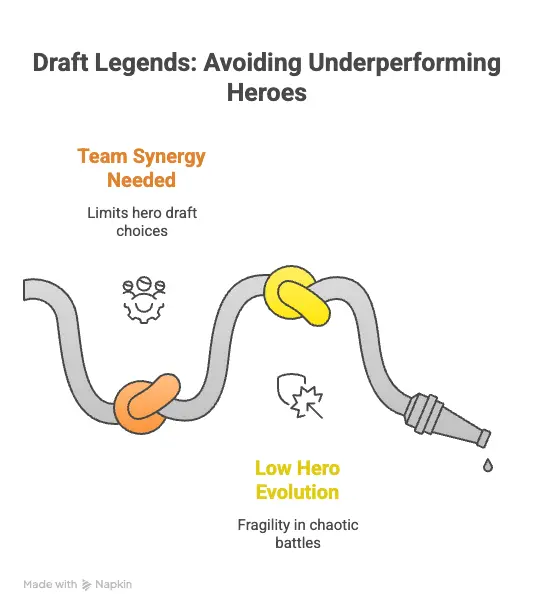
Not every strong hero performs well in Draft Legends. Some characters simply rely too much on precise team setups that this mode rarely allows. For instance, Fafnir, Dante, and Electra can be incredibly powerful but need perfect synergy to reach their potential. Without it, they tend to underperform.
Additionally, unevolved heroes stuck at three stars are generally too fragile to survive the chaos of Draft battles. In this format, durability and adaptability matter far more than ideal stats on paper.
Final Thoughts
In the end, Draft Legends is not a contest of power but of strategy. It rewards intelligence, patience, and adaptability more than any other mode in Hero Wars: Alliance. You don’t need the biggest roster or the most emeralds — you need to think ahead, manage your draft smartly, and understand how to react under pressure.
Play with patience, study your counters, and choose the right moments to attack or wait. The climb toward the Legends League is not about brute force — it’s about discipline, timing, and knowing when to strike.
To every Guardian working hard to master this mode, remember that Draft Legends is a true test of your mindset and strategy. Stay sharp, stay consistent, and keep your focus on improving every draft. The rewards will follow naturally. For more guides, visit the Hero Wars Alliance blog on our website. Also, read the Hero Wars Best Arena Teams
FAQs: Top Draft Legend Guide Questions
Draft Legends is one of the best free-to-play sources of resources, offering 500 blue spheres upon reaching the Legends League and consistent rewards even in the free pass line.
Avoid mismatched opponents by canceling searches after a few seconds, play patiently near the top ranks, and time your attacks strategically to secure better placements.
Reliable defenders include Corvus, Astaroth, Julius, Aidan, Cascade, Guus, Folio, Satori, and Mushy, with situational counters like Amira, Polaris, Somna, Lian, Rufus, Tempus, and Morrigan.
Focus on one synergy path — magic or physical. Use heroes like Folio, Satori, Mushy, and Cascade for offense, while adding supports such as Sebastian, Aidan, or Faceless to strengthen the lineup.
Fafnir, Dante, and Electra often underperform without perfect synergy, and unevolved three-star heroes usually lack the durability needed to succeed.