
Cascade Stellar Skin Guide: Why the Health Upgrade Changes Survival, Not Speed


Introduction: The Cascade Stellar Skin Guide Begins With a Misleading Fear
A new Health-based Stellar Skin has arrived for Cascade in Hero Wars Dominion Era, and for players who understand energy mechanics, alarm bells immediately start ringing. At first glance, the upgrade looks like a mistake. After all, Cascade’s ultimate relies completely on energy, and none of his skills scale with Health. Because of that, many players assume the same thing right away: more Health must mean a slower ultimate.
However, that conclusion only survives at a surface level. Once real energy mechanics and real 5v5 testing enter the discussion, the obvious answer quickly falls apart. This Cascade Stellar Skin Guide explains why the math alone is misleading and what actually determines whether Cascade casts Hydrokinesis or dies before contributing.
The New Stellar Skin and the Core Question

The new Stellar Skin for Cascade increases his Health. Naturally, this raises concern among players. Since Cascade’s abilities do not scale with Health and his ultimate depends entirely on energy, the question feels unavoidable.
Does increasing Cascade’s Health slow him down by delaying Hydrokinesis?
To answer that correctly, the discussion must begin with how energy generation works in Hero Wars Dominion Era, not with assumptions.
How Energy Generation Works in Hero Wars Dominion Era
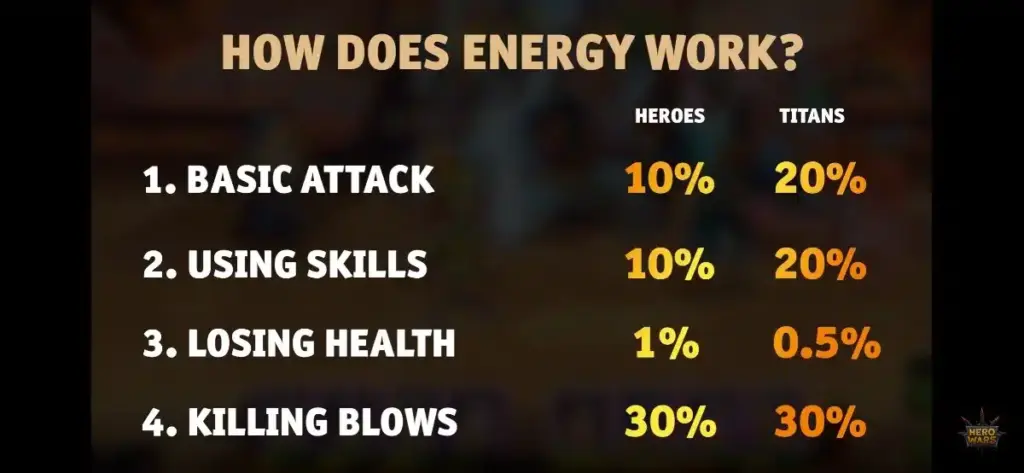
Heroes gain energy from four different sources. First, they gain ten percent energy from basic attacks. Second, they gain ten percent energy from using skills. Third, they gain one percent energy for every percent of Health they lose. Finally, they gain thirty percent energy from killing an enemy.
Cascade does not reliably gain energy from kills, and early in fights, he does not frequently use skills. Because of that, his energy income mainly comes from staying alive, landing basic attacks, and taking consistent damage over time.
As a result, survival becomes a core part of his energy generation, not a separate factor.
Comparing Health and Energy Without the Stellar Skin

Without the Stellar Skin, Cascade sits at roughly 450,000 Health. When he takes a hit dealing 100,000 damage, that attack removes about 22.2 percent of his total Health. As a result, he gains approximately 22.2 percent energy from Health loss.
At this stage, the numbers feel straightforward. However, the situation changes once the Stellar Skin enters the equation.
Comparing Health and Energy With the Stellar Skin

When the Stellar Skin is fully upgraded, Cascade gains roughly 106,000 additional Health, bringing his total to about 556,000. With this higher Health pool, the same 100,000 damage hit removes around 18.0 percent of his Health.
Because energy from damage is percentage-based, this hit now grants approximately 18.0 percent energy instead of 22.2 percent. This creates a difference of roughly 4.2 percent less energy gained per hit.
This number represents the entire theoretical slowdown. There is no hidden penalty beyond it.
Why This Is Where Players Misread the Situation

At this point, many players stop their analysis. Since each hit removes a smaller percentage of Health, it appears that Cascade gains energy more slowly. Mechanically, that observation is correct.
However, this view only looks at individual hits. It completely ignores what additional Health actually provides during real combat.
What Extra Health Actually Gives Cascade

Extra Health gives Cascade time.
It allows him to take more hits overall. It gives him more opportunities to perform basic attacks. Also, it keeps him alive long enough to use additional skills. Most importantly, it allows his energy bar to continue filling.
Energy gain does not matter if the hero dies. A dead hero generates zero energy. Because of that, survival directly impacts whether energy mechanics even have time to function.
Why 1v1 Testing Produces False Conclusions

To evaluate this properly, testing cannot happen in one-versus-one scenarios. Cascade is not designed as a 1v1 hero, and those situations exaggerate Health-based energy loss while removing real fight dynamics.
Instead, proper testing must happen in full 5v5 fights with controlled conditions and no artificial energy acceleration. Only then can timing and survival be measured accurately.
How the 5v5 Testing Was Conducted: Cascade Stellar Skin Guide

Every test used the same attacking team and the same defending team. The only variable changed between runs was whether Cascade had the Stellar Health skin equipped.
No energy-boosting heroes appeared in the lineup. No burst damage carries that steal kills were included. Also, no heroes that distort timing were present. The goal was not to win the fight. Instead, the focus stayed on two questions: when does Hydrokinesis occur, and does Cascade survive long enough to cast it?
Scenario One: When Burst Damage Is Barely Lethal

The first recurring scenario appeared when facing Galahad.
Without the Stellar Skin, Galahad’s ultimate kills Cascade outright. With the Stellar Skin, Cascade survives the same ultimate with a very small amount of Health remaining.
In this case, the discussion about slowdown becomes irrelevant. Without the skin, Cascade never casts Hydrokinesis. With the skin, he survives and gets the chance to act. The outcome shifts completely.
This difference has nothing to do with timing. It comes down to survival versus death.
Scenario Two: When Damage Remains Stable

The second scenario occurs when Galahad fails to kill Cascade in both versions. Damage stays moderate and controlled throughout the fight.
Under these conditions, Cascade casts Hydrokinesis at one minute and thirty-seven seconds with the Stellar Skin. Without the skin, he casts it at one minute and thirty-eight seconds. Since the match timer counts down from two minutes, the difference equals roughly one second.
A one-second variation does not represent a slowdown. Instead, it falls within normal fight variance caused by animations, targeting behavior, and minor damage fluctuations.
If Health genuinely slowed Cascade in practice, delays of several seconds would appear consistently. That does not happen.
What the Testing Clearly Demonstrates: Cascade Stellar Skin Guide

Across repeated tests, the results stay consistent.
The Stellar Health skin does not meaningfully delay Cascade’s ultimate. In many fights, it has no timing impact at all. In borderline burst scenarios, it prevents Cascade from dying before acting. Moreover, in extended engagements, surviving longer often results in equal or even greater total energy gained over time.
Although a narrow theoretical case exists where extra Health could slightly delay Hydrokinesis, that situation requires extremely controlled damage and perfect timing. Even then, the delay measures fractions of a second rather than meaningful gameplay time.
Final Verdict of the Cascade Stellar Skin Guide
The conclusion is straightforward.
The Stellar Health skin does not slow Cascade in real Hero Wars Dominion Era gameplay. It does not increase his damage, and it does not redefine his role. Instead, it reduces failure cases where Cascade dies before contributing anything.
If Cascade already exists in your roster, the skin serves as a long-term quality upgrade. If Cascade is not built, the skin does not suddenly make him mandatory. Most importantly, the fear that Health delays his ultimate is not supported by real 5v5 testing.
In real fights, staying alive longer almost always matters more than small differences in per-hit energy gain. For Cascade, that difference often determines whether Hydrokinesis is cast at all.
To sum it up, the Stellar Health skin does not slow Cascade down. The math shows a small theoretical difference, but real testing shows what truly matters. Cascade survives longer, reaches Hydrokinesis just as consistently, and in borderline situations, the skin completely changes the outcome.
This upgrade does not increase power. It increases reliability.
Check out: Hero Wars Cascade Best Team Brawls Guide
Hero Wars Cybernetic Skins: Cascade & Mushy and Shroom Guide
Cascade Judge Synergy Guide: Hidden Power in Hero Wars Dominion Era
3 Cascade Team Tips: Hero Wars Dominion Era Guide
Hero Wars Cascade Pet Guide
Hero Wars Cascade Map Mysterious Island
Hero Wars Cascade Best Team Guide
Hero Wars Cascade Priority Guide: Maximize His Magic Potential
Hero Wars Cascade Skills Explained – Full Breakdown
Cascade Event
Cascade Numbers Breakdown
Cascade Hero Wars Breakdown
FAQs: Top Cascade Stellar Skin Guide Questions
Because Cascade’s skills do not scale with Health and his ultimate depends entirely on energy, many players assumed extra Health would delay his ultimate.
Yes, per hit, Cascade gains slightly less energy due to percentage-based Health loss, but this represents the full theoretical slowdown.
Because Health keeps Cascade alive longer, allowing him to generate energy over time instead of dying early.
Testing showed no meaningful delay in Hydrokinesis timing and demonstrated that the skin often prevents Cascade from dying before acting
No. It does not change his role or increase damage. It simply removes failure cases and improves reliability.