
Hero Wars Cybernetic Skins: Cascade & Mushy and Shroom Guide

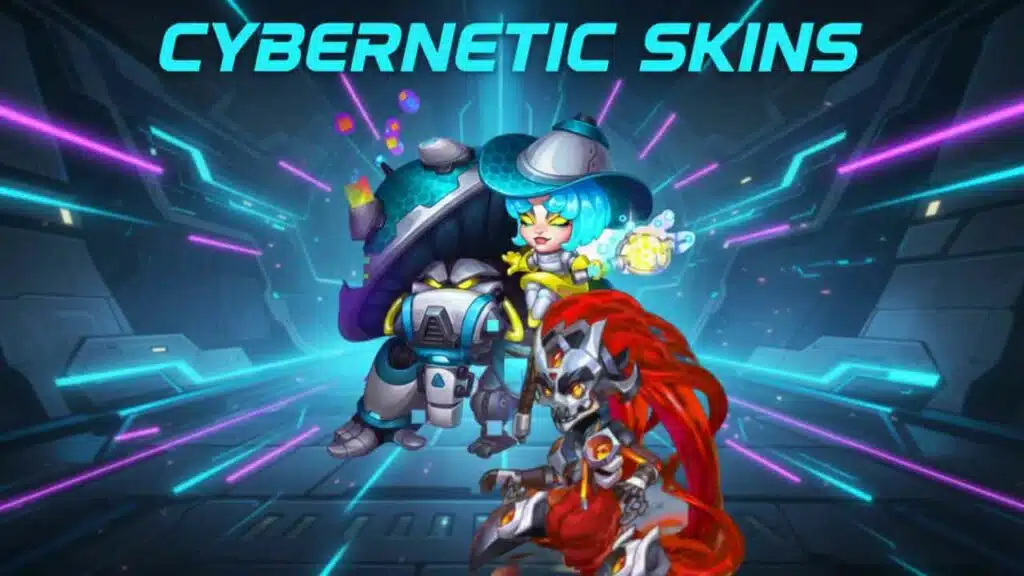
The Cybernetic skins for Cascade and for Mushy and Shroom are now available in Hero Wars, and with them come meaningful stat upgrades that can influence how these heroes perform in battle. These skins aren’t just visual adjustments—each one targets a specific role: Cascade gains more Magic Attack to enhance her damage output, while Mushy and Shroom receive additional Armor to improve their survivability. In this guide, we take a clear and practical look at what these stats actually do in real combat scenarios, so you can decide whether these skins are worth investing in based on your current teams and overall playstyle.
Why Cybernetic Skins Matter Now
In many games, skins are purely visual, but Hero Wars has always treated skins as real stat upgrades — and the new Cybernetic skins follow that same pattern. Cascade’s Cybernetic skin adds 10,650 Magic Attack, boosting three of her four abilities and increasing her overall damage output. Mushy and Shroom receive 10,650 Armor, strengthening their frontline durability and helping them withstand more pressure from physical attackers. In a game where raw numbers directly affect survival and team synergy, these stat increases can shift matchups and influence which teams perform better in the current meta.
Cascade’s Cybernetic Skin Breakdown
Who Is Cascade?

Cascade’s entire kit scales with Magic Attack, which makes any increase to this stat immediately valuable. Hydrokinesis gains more damage per second, Tidal Wave hits harder across the whole enemy team, and Refluence deals more damage every time a marked target is struck. Because all three damaging abilities use Magic Attack as their foundation, even a single skin that boosts this stat noticeably amplifies Cascade’s overall impact in battle.
How the Magic Attack Boost Changes Numbers
Cascade’s skin doesn’t just look sleek; it adds 10,650 Magic Attack. This buff increases damage across three of Cascade’s four skills. Here’s a closer look at the numbers before and after the skin:
Visualizing Cascade’s Damage Boost
To help visualize the impact of Cascade’s Cybernetic skin, the following SVG bar chart compares the base damage versus the enhanced damage for each skill. The green bars represent the original damage, while the blue bars show the damage with the skin applied.
Why the Extra Damage Matters

At first glance, an additional 1,278 damage on Refluence might seem modest. However, this skill triggers every time an allied hero hits a marked enemy. Heroes like Judge and Krista can land multiple strikes within its five‑second duration, meaning that seemingly small bump quickly stacks into substantial burst damage. The upgrade elevates Cascade from a good mage to an explosive threat when paired with multi‑hit allies.
In summary, if your team thrives on magic damage and frequent hits, Cascade’s Cybernetic skin is a smart investment. It improves visuals and amplifies damage across the entire kit.
Mushy and Shroom’s Cybernetic Skin Breakdown
Who Are Mushy and Shroom?

Mushy and Shroom is a frontline magic-damage tank who protects the team while applying consistent magic damage through its Shrooms. As the battle progresses, Mushy and Shroom becomes harder to take down thanks to the growing number of Shrooms on the field, allowing the hero to control space, absorb pressure, and support the team while dealing steady magic damage.
Armor Boost and Its Real Impact
Mushy and Shroom’s Cybernetic skin grants 10,650 Armor. On paper, higher Armor reduces physical damage taken, but it doesn’t affect magic or pure damage. To truly understand this skin’s effect, you have to compare damage received from physical attackers before and after equipping it.
Legend for the impact column:
Attacker — The physical damage dealer hitting Mushy and Shroom.
AP (Armor Penetration) — How much Armor this attacker ignores.
Armor w/o Skin — Mushy and Shroom’s Armor before the Cybernetic skin.
Armor w/ Skin — Mushy and Shroom’s Armor after the Cybernetic skin (+10,650).
DR w/o Skin — Damage reduction percentage before the skin (calculated after AP).
DR w/ Skin — Damage reduction percentage after the skin (calculated after AP).
Impact — How much the skin changes the matchup:
- 🟢 green circle → strong impact of the new armor skin
- 🟠 orange circle → medium / situational impact
- 🔴 red circle → almost no impact (or none)
*Heroes marked with a star (Lyria, Qing Mao, Ninja Turtles, Tristan, Elmir, Fox, Isaac) have an armor penetration artifact that activates on their ultimate. Because of that, even when the math shows a good increase, in real battles the skin’s effect against their ultimate hits will often be lower, so I rated them at most orange.
Understanding Armor vs Armor Penetration
How Armor and Armor Penetration Work
1. Effective Armor after penetration:
$$ \text{EffectiveArmor} = \max(0, \text{Armor} – \text{Penetration}) $$
2. Received Damage Coefficient:
$$ \text{ReceivedDamageCoeff} = \frac{1}{1 + \frac{\max(0, \text{Armor} – \text{Penetration})}{3000}} $$
3. Damage Reduction:
$$ \text{DamageReduction} = 1 – \text{ReceivedDamageCoeff} $$
4. Final Damage Taken:
$$ \text{DamageTaken} = \text{Attack} \times \text{ReceivedDamageCoeff} $$
In Hero Wars, physical damage is not reduced by a flat number. Instead, the game compares the attacker’s Armor Penetration (AP) with the defender’s Armor and uses a formula to determine how much damage is actually absorbed.
First, Armor Penetration reduces the defender’s Armor. If AP is higher than the target’s Armor, the defender is treated as having zero Armor and takes full damage. If the defender still has Armor left after AP is applied, that remaining Armor is converted into a damage reduction percentage.
Hero Wars uses a scaling curve for this: the first few thousand points of Armor give very high damage reduction, but each additional point gives slightly less benefit. This prevents Armor from becoming overpowered at extremely high values while still rewarding meaningful investment.
The formula produces a “received damage coefficient,” which determines how much of the hit goes through. A coefficient of 1.0 means full damage. A coefficient of 0.3 means the hero takes 30% of the hit and reduces 70%. Damage reduction is simply 1 − coefficient.
In the Mushy and Shroom skin comparison, we measure effective Armor before and after penetration, convert it to damage reduction, and then evaluate whether the new Cybernetic Armor skin makes a small, medium, or strong impact against each physical attacker.
Conclusion
Both Cybernetic skins bring meaningful benefits to Hero Wars players. Cascade’s skin supercharges every magic‑based ability, turning Hydrokinesis, Tidal Wave and Refluence into deadlier weapons. Mushy and Shroom’s skin, meanwhile, bolsters defensive capabilities, dramatically reducing physical damage from key attackers. The choice ultimately depends on your team’s needs: do you crave more damage or more durability? Invest accordingly, test the changes in your lineups and share your experiences with the community.
You can explore more about the Hero Wars universe and its full roster of heroes on the official Hero Wars site
Check out: Cascade Stellar Skin Guide: Why the Health Upgrade Changes Survival, Not Speed
FAQ
Three out of Cascade’s four skills — Hydrokinesis, Tidal Wave and Refluence — scale with Magic Attack, so they all receive a notable boost. The ultimate alone adds about 48,000 total damage.
No. The armor boost only reduces physical damage. Magic and pure damage remain unaffected, so it’s best used against physically focused opponents.
Physical damage dealers like Andvari, Dante, Dark Star, Iris, Jhu and K’arkh see the largest drop in output. Against them, the armor skin can cut damage by more than half.
Heroes such as Lyria, Qing Mao, the Ninja Turtles, Tristan, Elmir, Fox and Isaac have Armor Penetration artifacts that activate with their ultimates. These abilities temporarily ignore large chunks of Armor, reducing the skin’s effectiveness.
It depends on your lineup. Cascade’s skin is excellent if your team revolves around magic damage and frequent hits, while Mushy and Shroom’s skin is ideal for countering physical attackers and increasing frontline durability. Evaluate your roster needs before spending resources.