
Hero Wars Alliance Ishmael Guide 2026


This Hero Wars Alliance Ishmael guide is for every Guardian who remembers when seeing the demon on the other side of the battlefield instantly demanded respect. Back then, his speed, Critical Hit Chance, Vampirism and nonstop attacks could take over an entire fight. Today, however, the game has changed. There are more layers of protection, more Control and more ways to disrupt aggressive frontline heroes, while many newer damage dealers create huge impact much faster.
So Ishmael finds himself in a strange position. His problem isn’t that his identity doesn’t make sense. In fact, his identity is extremely clear. The real question is whether today’s game still gives that identity enough room to breathe. Before we ask what he could become, though, let’s understand the demon we already have.
How Ishmael’s Awakening Works
Everything starts with Awakening. Ishmael transforms into his demonic form, which increases his Critical Hit Chance and the speed of his basic attacks. Unlike a simple Ultimate where something happens and immediately ends, he wants to stay transformed.
While he’s in demonic form, his Energy is gradually consumed. Once that Energy reaches zero, the transformation ends. As a result, every battle becomes almost a race: he wants to transform, attack faster, keep producing pressure and make that window as destructive as possible before the demon disappears.
Why Attack Speed Matters So Much
That’s why attack speed becomes so interesting for him. We’re talking about a Warrior whose basic attacks get faster while his Critical Hit Chance climbs at the same time. If nothing interrupts him, every additional attack is another chance to deal damage, another chance to trigger the rest of his kit, and another moment the opponent has to survive.
This isn’t a hero that wants to wait patiently in the back line. Instead, Ishmael wants contact. He wants a target directly in front of him, and he wants to keep hitting it again and again until something dies.
Control: The Demon’s Biggest Weakness
There is a major condition attached to all of this, though: he needs to be allowed to attack. Control can completely change his rhythm. A stun doesn’t just stop one basic attack, because a silence or another interruption at the wrong moment can also wreck what you’re trying to build around his transformation.
Every second he isn’t doing what he was built to do is valuable time vanishing from that offensive window. For that reason, it’s one of the first things to check before putting him into a battle. Don’t only look at the enemy tank and ask whether Ishmael can kill it. Rather, ask what is going to stop him from attacking it. If the answer is “very little,” then he can still become extremely uncomfortable to face.
Dodge, Vampirism and the Fourth-Strike Stun
Physical attackers have another problem when fighting him. Every twelve seconds, Ishmael can dodge incoming Physical Damage, so trying to hit him is almost like hitting a mirage. Against the right physical opponent, that moment denies an important source of damage and buys him more time for his own assault.
Time is everything for this hero, because he also has Vampirism. The more damage he can continuously produce, the more he can sustain himself through that aggression. In other words, his offense and survival aren’t separate ideas. When he’s attacking, dealing damage and recovering through Vampirism, he’s doing exactly what he wants. On the other hand, when he’s controlled and unable to connect with the enemy, the entire machine starts falling apart.
There’s one more mechanic that gets much more interesting next to his attack speed: every four strikes, Ishmael stuns his target for one second. On paper, one second doesn’t sound impressive. Still, don’t read it by itself. Read it together with faster basic attacks, critical hits, Vampirism and repeated strikes, and that one second becomes part of the rhythm.
Think of it as hit, hit, hit, stun, then continue attacking and build toward the next one. In the right battle, a one-second interruption is enough to delay an enemy action, break their rhythm and hand Ishmael another small window of pressure. That’s why he can still be extremely aggressive against certain physical front lines, especially when the target lacks the Armor or survival to absorb what happens once he starts rolling.
This is also where we need to be realistic about him today. He can’t simply walk into every defense and expect the old formula to work. So rather than asking “Is Ishmael still powerful?”, the better question is “What does he need around him to still be powerful?” That takes us straight to his allies.
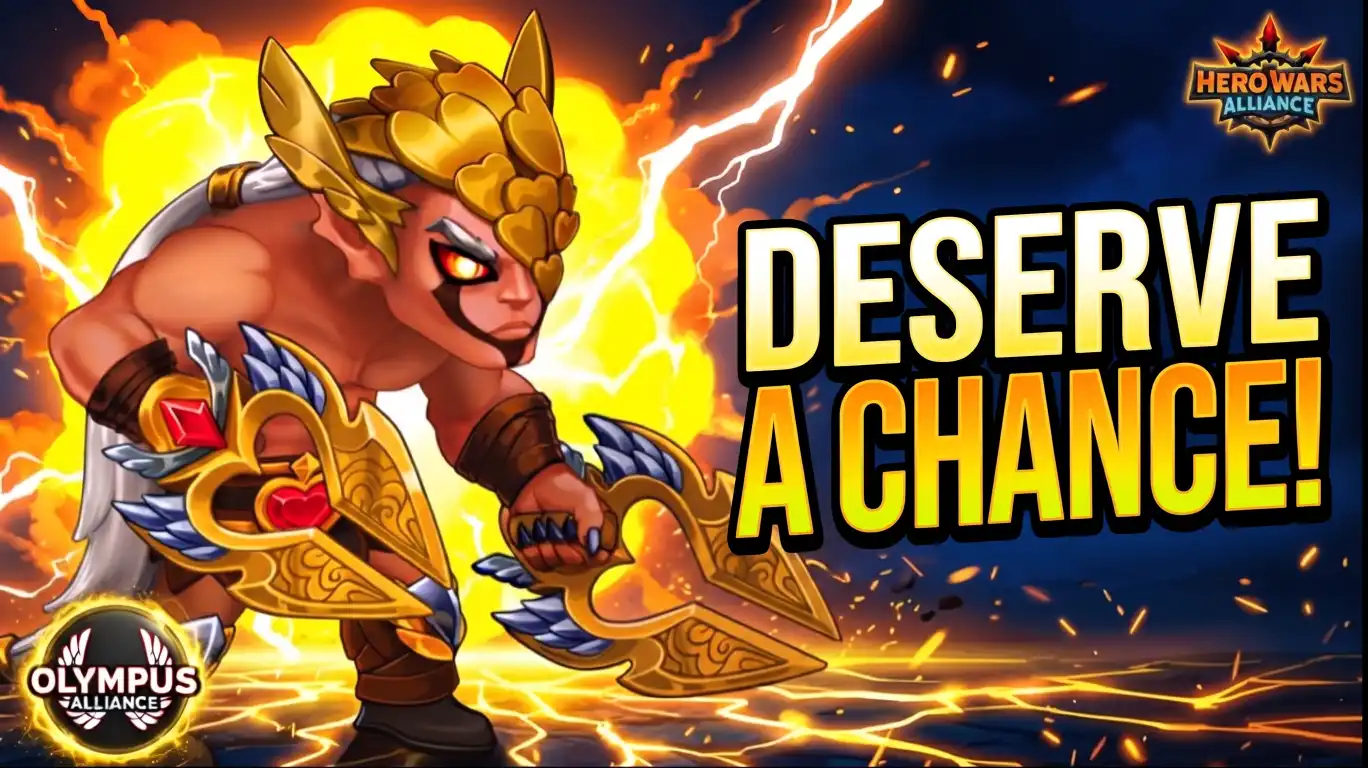
Hero Wars Alliance Ishmael Guide: Best Partners
The most useful part of any Hero Wars Alliance Ishmael guide is the team around him, because his partners almost tell us exactly what his problems are. Each one tackles a different obstacle standing between the demon and his target.
Qing Mao: Breaking the Armor in Front of Him
Qing Mao is one of the most natural partners when your goal is breaking the enemy standing directly in front of Ishmael. Her ability to steal Armor from nearby enemies progressively weakens the target, which is exactly what an aggressive physical attacker wants. After all, he doesn’t want to spend the entire battle scratching a heavily protected tank. He wants that protection compromised so his rapid attacks can start doing real work.
Soleil: Protecting His Rhythm
Soleil addresses one of his biggest problems directly. If Ishmael is the frontmost hero, Soleil can protect him against important Control effects such as Stun, Silence and Blindness. Here we’re not simply adding damage; instead, we’re removing the things that stop the demon from functioning. Since his biggest requirement is being allowed to attack, protecting his rhythm can sometimes be more valuable than adding another offensive hero beside him.
Guus: Sustain and Critical Hits
Guus approaches the problem differently. His healing gives Ishmael more chances to survive the pressure he takes at the front, while his Critical Hit potential fits naturally with a hero already built around crits and rapid attacks. More sustain means more time, and more time means more attacks. With this hero, more attacks are basically the entire conversation.
Fafnir: Protection Plus Physical Support
Fafnir’s Runic Shield helps protect Ishmael, while Runic Blade and Fafnir’s physical support strengthen the offensive side of the build. Once again, we’re solving both sides of the same equation: keep him alive, then make the attacks he produces matter.
Tristan: Armor Penetration
Finally, there’s Tristan. If Ishmael is going to spend his time hammering the opposing frontline, Armor eventually becomes one of the biggest questions. That’s where Tristan becomes the machine we need, since his Armor Penetration support lets Ishmael turn all that speed and Critical Hit pressure into meaningful damage against targets that would otherwise absorb too much of it.
In different ways, they’re all trying to create the same thing: freedom for Ishmael to attack. Once he’s transformed and nothing stands between him and his target, you can still see the old demon hiding underneath. In 2026, however, the game asks much more from him before he gets there.
What Ishmael Needs to Succeed Today
Even now, the demon still has a very clear condition for success:
- A target he can actually hit
- Help overcoming enemy Armor
- Protection from the Control that destroys his rhythm
- Enough sustain to stay in the fight
- Time to transform and keep attacking
If the demon gets enough freedom to keep attacking, you may remember very quickly why Guardians used to fear him.
Could Ishmael Get a Comeback?
That’s why Ishmael is another hero we’d love to see receive serious attention in the future. We don’t necessarily want him to lose what makes him Ishmael, and we don’t need him turned into a complicated hero with ten unrelated mechanics. Rather, we want this identity to become dangerous again: the demon fighter, the Warrior who transforms and attacks faster and faster, the hero who sustains himself by fighting and punishes a physical frontline once he finds his rhythm.
Future Relics could eventually strengthen that identity, another adjustment might give him better tools for the modern battlefield, or the developers may have another idea entirely. Nothing is confirmed, though, and until something is officially revealed, that’s only hope.
Final Thoughts
We’re not revisiting older heroes to pretend every one of them is secretly meta. Instead, we do it because understanding why a hero struggles today is just as important as understanding what that hero does well. Hopefully this Hero Wars Alliance Ishmael guide shows both sides: Ishmael doesn’t need us to pretend it’s still the old days, but he does need some love that lets his original identity survive in the game we have today.
Personally, we hope his story isn’t finished. After all, watching an old monster become dangerous again is exactly the kind of comeback we want to see in Hero Wars: Alliance.
More Hero Wars Alliance Guides
- Defiant Edge Resource Guide
- Mushy’s Max Health Secret
- Mushy Relics Explained
- Bountiful Roads Smart Shop Guide
Join the Olympus Alliance Discord
Running Ishmael in your lineup or theorycrafting his comeback? Share your teams, ask questions and talk Hero Wars Alliance with the community.