
Dante Relics Overview: Hero Wars Alliance Guide


Introduction: Why Dante’s Relics Matter Now
Dante’s relics are finally here, and they bring a subtle yet powerful change to Hero Wars Alliance. Instead of just boosting raw damage, these relics emphasize control, positioning, and sustained pressure. Dante has always excelled through movement, dodging, and disrupting enemy plans, and now these relics sharpen that identity.
In this Dante relics overview, we will explore how these relics transform fights, enhance his role, and reinforce his strengths without compromising his dodge-focused playstyle. Every level adds meaningful value, making Dante more impactful from the very first upgrade.
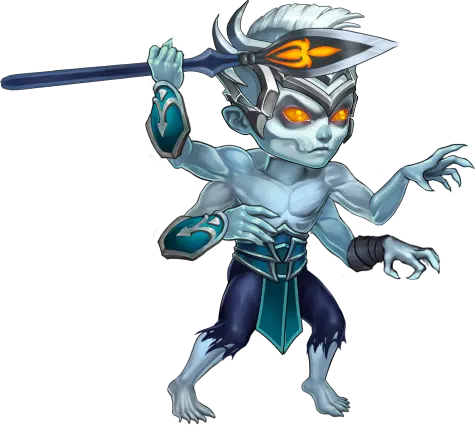
Turning Movement Into Real Power
The central idea behind Dante’s relics is simple: movement creates power. Right from relic level one, Dante gains a new ability that changes how battles unfold. Every nine seconds, he launches a spectral spear at the nearest enemy, dealing damage and pushing them back.
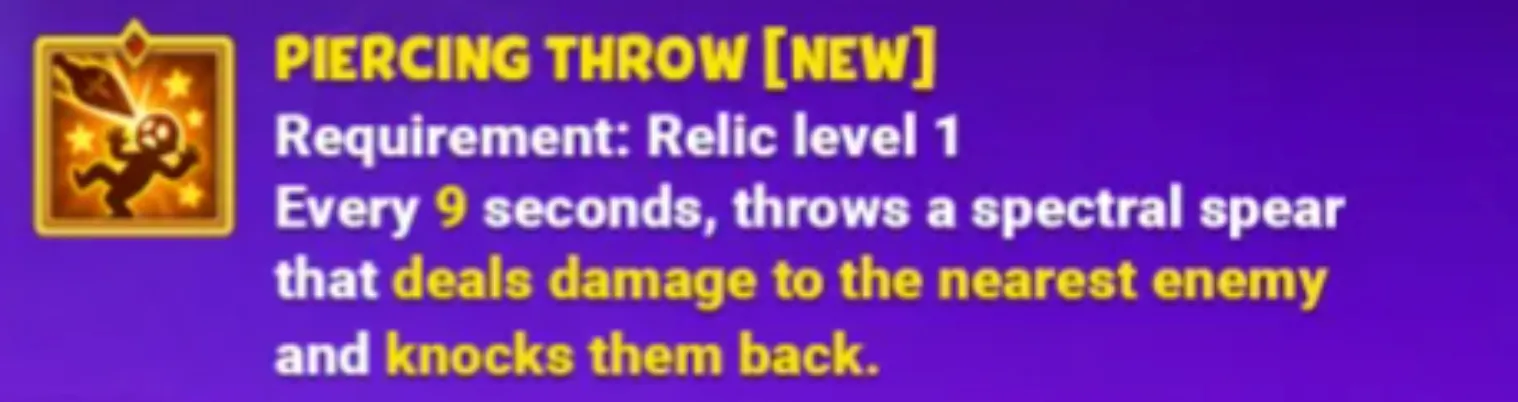
This knockback does more than disrupt—it reshapes enemy formations, creating openings in the midline and backline. Moreover, Teams relying on shields, static frontliners, or tight formations will find their defenses fractured. Because this effect happens automatically, Dante applies consistent and repeatable pressure, not just a one-time burst.
Scaling Pressure Across Relic Levels
Now in Dante Relics Overview, As Dante’s relics increase in level, their impact grows. At relic level ten, each knockback grants him a bonus to armor penetration for several seconds. This means Dante no longer just displaces enemies; he converts every successful knockback into tangible damage.

This mechanic solves a long-standing challenge. Dante can now scale his damage without abandoning his dodge-based identity, allowing him to remain elusive while still dealing significant harm.

At relic level twenty, knockbacks begin to reduce the target’s main stat for a notable duration. This is not simply increasing damage—it is stat denial. Frontline or near-frontline enemies hit by this effect become weaker over time, decreasing their survivability, offensive output, and overall scaling. In prolonged engagements, this creates a snowball effect where enemies are both displaced and systematically weakened.

Finally, at relic level thirty, Dante’s kit adapts dynamically to the fight. When enemies are close, his dodge rises, making him harder to hit. When enemies are at a distance, his physical attack increases, boosting his offensive power. This adaptive mechanic ensures Dante benefits in every situation, removing the need to choose between offense and defense.
Passive Benefits of Relic Levels
In addition to the active effects, every relic level provides Dante with increased health and physical attack. Health boosts his survivability without compromising dodge, while physical attack improves all offensive output, including the pressure applied after knockbacks.
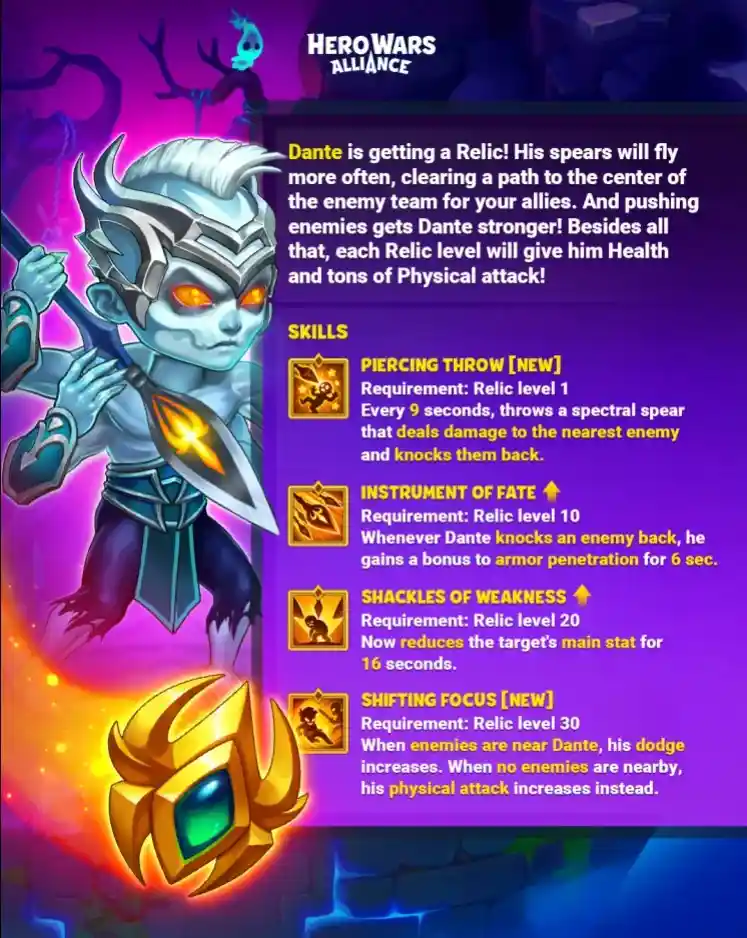
Together, these bonuses make Dante more effective across every engagement. His movement becomes more punishing for enemies, his control becomes consistent, and his scaling ensures he remains impactful as fights progress.
How Dante Performs in Practice: Dante Relics Overview

In real battles, Dante’s relics reinforce what he already does best: disrupting enemy formations, forcing mispositioning, and turning aggressive opponents into mistakes. Static frontlines will struggle to stay cohesive, and tightly grouped teams will find their spacing constantly manipulated.
Importantly, Dante does not lose effectiveness over time. Instead, he ramps up as fights drag on, ensuring consistent value throughout engagements. Even early relic levels already provide meaningful advantages, while higher levels enhance his control, damage, and adaptability.
Obtaining Dante’s Relics
Dante’s relics become available through special offers and the limited Relic Pass starting January 26th. The timing aligns perfectly with a game environment where dodge, displacement, and tempo control are especially valuable. Early relic levels already provide noticeable benefits, while full upgrades deepen his pressure and scaling further.
Key Takeaways: Dante Relics Overview

Dante’s relics do not reinvent him—they strengthen his core strengths and address historical weaknesses in scaling and consistency. Players who already use Dante will find these relics feel natural, like completing his toolkit. For those considering him, the relics provide a compelling reason to integrate him into their team.
By increasing movement-based pressure, converting knockbacks into damage, and providing adaptive defensive and offensive bonuses, Dante becomes even more effective in controlling fights. His relics ensure he remains impactful, disruptive, and scalable in Hero Wars Alliance.
Check out: Dante 3 Tips Guide: Synergies, Supports, and Counters
Hero Wars Alliance Dante Guide
Dante Relics Guide: Hero Wars Alliance
FAQs: Top Dante Relics Overview Question
Dante’s relics amplify his movement, knockbacks, and pressure without changing his dodge-focused playstyle. They make him more consistent and impactful in every fight.
At relic level one, Dante throws a spectral spear every nine seconds, dealing damage and knocking enemies back. This creates openings in enemy formations and adds continuous pressure.
At relic level ten, Dante gains bonus armor penetration whenever he knocks an enemy back, converting disruption into real damage potential.
At relic level twenty, knockbacks reduce the target’s main stat for a significant duration, weakening frontline or near-frontline heroes over time and creating a snowball effect.
At relic level thirty, Dante adapts dynamically: dodge increases when enemies are near, and physical attack increases when enemies are distant, allowing him to remain strong in every situation.
Yes, each relic level grants health and physical attack, improving Dante’s survivability and offensive output.
Dante’s relics are available through offers and the limited Relic Pass starting January 26th. Early levels are effective, with higher levels enhancing control, damage, and scaling.