
Hyperion Build Guide– Dungeon and Guild War Strategies

In Hero Wars Alliance, few titans have a legacy as enduring as Hyperion. Once revered solely as a dungeon powerhouse, he has now returned to the battlefield in a way that demands attention. Whether you are farming titanite or leading your Water squad into Guild War, understanding how to build Hyperion correctly is essential. In this hyperion build guide, we break down every step to maximize his impact for both PvE and PvP, ensuring your Water team stays unstoppable.
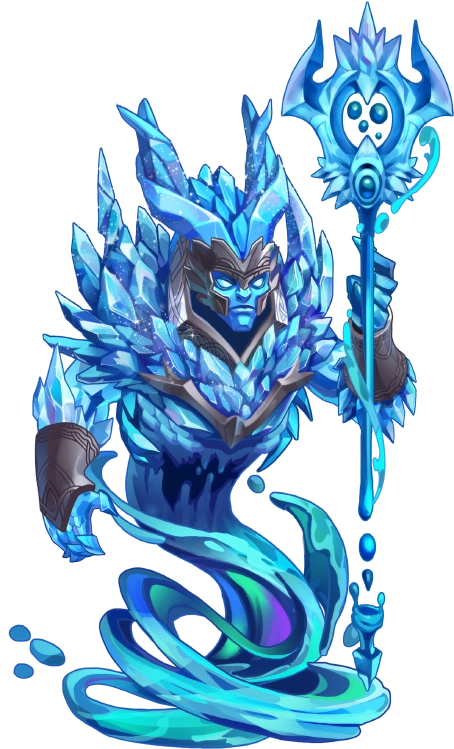
Who is Hyperion?
Hyperion has long been a cornerstone of dungeon play. From early to mid-game, his healing keeps titans alive through every wave, while his damage ensures efficient clearing. Many players rely on him to transform the dungeon from a tedious grind into a steady source of gold, potions, and titan resources. This reliability alone has cemented Hyperion as one of the most valuable titans in the game. Read the full Hyperion build guide.
However, the tides of battle have shifted. With the arrival of Tydus, the Water summoner, the Water faction has regained its strength. What was once considered a support-only titan is now a pivotal finisher in war. Hyperion has evolved into a force that drives tempo, applies pressure, and secures victories for Water teams. Understanding the difference between a dungeon Hyperion and a war Hyperion is crucial, as combining approaches can reduce effectiveness, while specialized builds unlock full potential.
Hyperion Dungeon Build
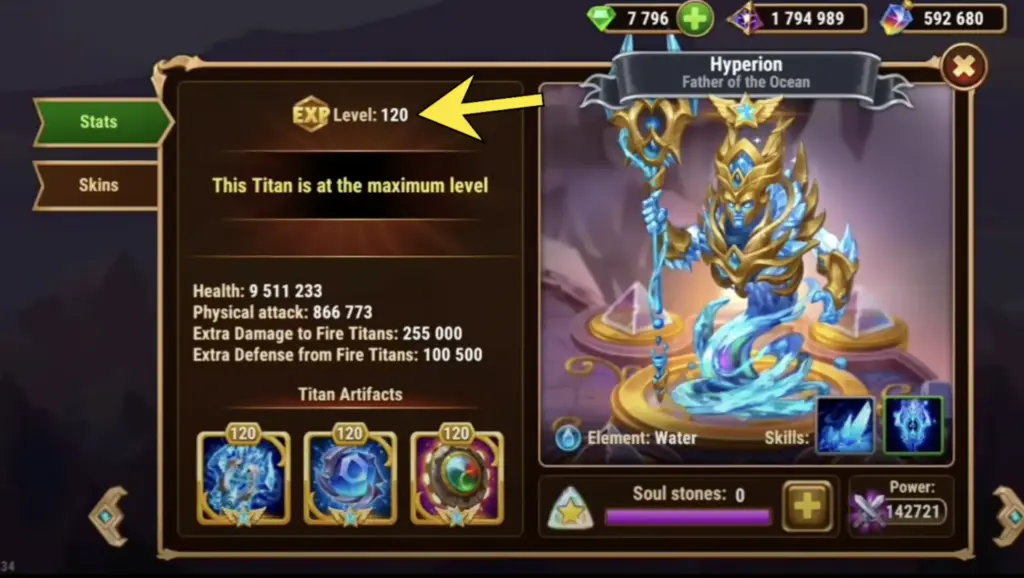
If your goal is dungeon domination, the path is simple and straightforward. First, level Hyperion to 120 and unlock his first skin. Then, upgrade his artifact weapon to six stars at level 120. At this stage, do not invest in his seal or crown. Additional resources are unnecessary.
This approach ensures consistent healing and damage output, allowing you to reliably collect titanite each day. Hyperion does not need overbuilding to fulfill his dungeon role. Consistency is key, and his healing guarantees that your dungeon runs remain smooth and predictable.
Hyperion Guild War Build
Now in Hyperion build guide, Guild War requires a completely different strategy. For instance, In this setting, Hyperion transforms into one of the main sources of finishing damage for a five-Water composition. Sigurd absorbs incoming pressure at the front line, Nova maintains the fight tempo through stun, Mairi applies constant damage, and Tydus orchestrates sustain and energy cycling. Hyperion’s role is critical: he is the titan that converts accumulated pressure into victory, ensuring the team finishes what it starts.
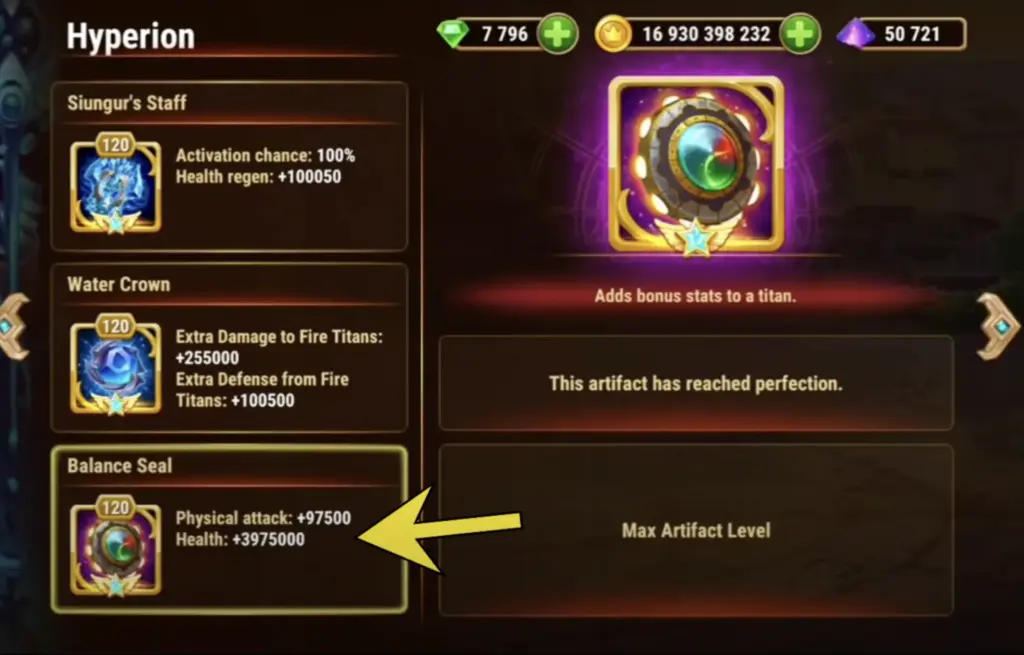
The first priority for war Hyperion is his seal, upgraded to six stars and level 120. This provides essential health and physical attack. Without the seal, Hyperion cannot survive long enough to cast effectively or deal meaningful damage.
Next, focus on Hyperion’s skins. He possesses two physical attack skins, both of which are necessary for war. These skins provide the momentum required to maintain offensive pressure. War battles are fast-paced, and without them, Hyperion cannot drive the team forward effectively.
The crown, while useful for extra damage and Fire defense, is optional. A properly built Water team does not rely on it, as Sigurd’s shield, Tydus’s sustain, and Hyperion’s finishing capability ensure victory. Crowns can be added later for endgame power, but early investment should prioritize seals and skins.
Team Formation and Strategy

Once Hyperion is built for war, the ideal formation is straightforward: Sigurd in front, Hyperion behind, Tydus managing rhythm, Nova providing stun pressure, and Mairi delivering constant damage. This team flows naturally and grows stronger as the battle progresses. Opponents must respond with precision or risk collapse under the Water squad’s pressure. When properly executed, this team can defeat strong Light and Darkness defenses, while Fire defenses fall almost instantly.
Counters and Weaknesses
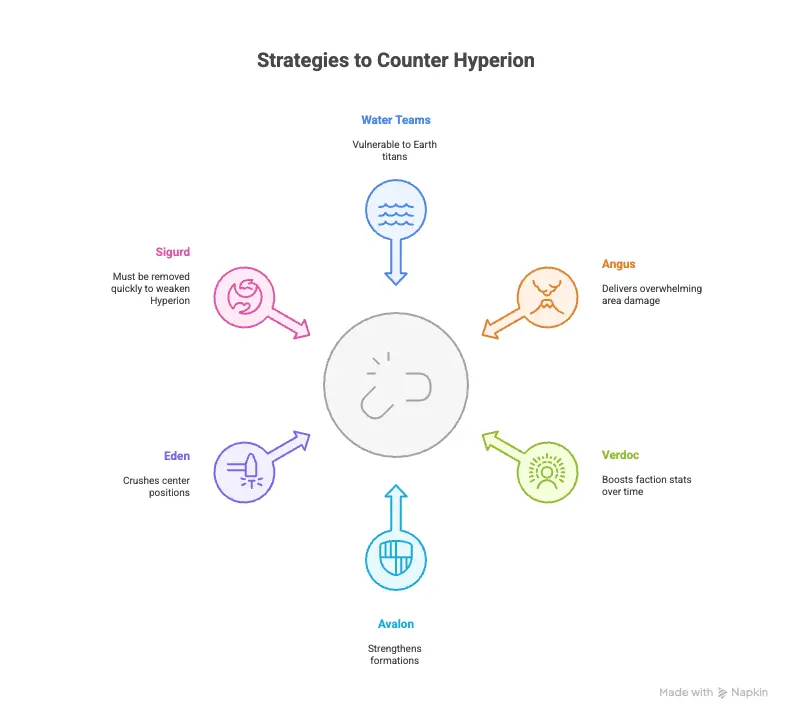
Now in the Hyperion build guide, Even Hyperion has counters. Moreover, Water teams are most vulnerable to Earth titans. Also, Angus delivers overwhelming area damage, Verdoc boosts faction stats over time, Avalon strengthens formations, and Eden crushes center positions. Timing is crucial: Sigurd must be removed quickly. If he survives too long, Tydus maintains invulnerability cycles, allowing the Water formation to persist. Once Sigurd falls, the team’s structure weakens, significantly reducing Hyperion’s effectiveness.
Conclusion on Hyperion Build Guide
Finally, Hyperion has not disappeared; he has evolved. In fact, In the dungeon, he remains a foundational titan that drives your daily resources. Also, In Guild War, he has emerged as a decisive damage engine and sustain amplifier at the heart of the Water strategy. By following this hyperion build guide and separating dungeon and war priorities, you can ensure Hyperion thrives in both roles, turning pressure into victory and making your Water team unstoppable. For more guides, visit the Hero Wars Alliance blog on our website. Check out: Nova Build Guide, Sigurd Titan Guide, Mairi Build Guide, Tydus Build Guide Maya Relics Guide
FAQs: Top Hyperion Build Guide Questions
For dungeon, level Hyperion to 120, unlock his first skin, and max his artifact weapon to six stars. Avoid investing in seal or crown for PvE efficiency.
In war, prioritize the seal to six stars, then max both physical attack skins. The crown is optional and can be added later for endgame progression.
Place Sigurd in front, Hyperion behind him, Tydus managing rhythm, Nova providing stun, and Mairi delivering constant damage. This formation balances survival, momentum, and finishing power.
Earth titans are the main counter. Key threats include Angus, Verdoc, Avalon, and Eden. Removing Sigurd quickly is essential to break the Water formation
Yes, but only if dungeon and war builds are separated. Mixing priorities reduces efficiency, while specialized builds allow Hyperion to excel in each role.