
Nebula New Skills Explained | Hero Wars Alliance

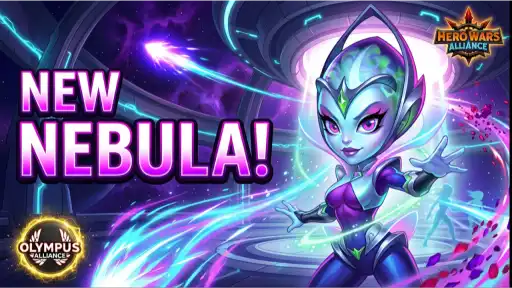
Nebula’s full rework has arrived in Hero Wars: Alliance, and it’s a complete overhaul rather than a quick tune-up. This guide has Nebula new skills explained one ability at a time, so you know exactly what changed, how each mechanic behaves in a real fight, and which skill looked incredible on paper… until we actually tested it.
There’s a lot to unpack here, and one ability in particular had us genuinely hyped before reality set in. So let’s go through the reworked kit skill by skill.
Astral Projection: Energy Burn With a Catch
First up is Astral Projection. When the ability activates, Nebula launches a projectile that deals Physical Damage to every enemy caught inside its area of effect while also burning their Energy. There’s a crucial catch, though: both the damage and the Energy burn are split equally between all enemies hit by the explosion, so the more targets you clip, the less each one actually takes.
If you leave the projectile alone, it travels all the way to the farthest enemy and detonates automatically. However, you can also trigger it manually, which is where the skill turns tactical — you decide when and where it explodes instead of waiting for it to reach the back line.
Because timing and positioning change everything here, Astral Projection rewards players who think about their detonation instead of firing on autopilot.
Serenity: Healing Plus a Cleanse
Next comes Serenity, and this one leans hard into support. It restores Health to Nebula’s two nearest allies and cleanses negative effects from them at the same time. Based on the values shown, that’s 43,240 Health recovered, scaling with Nebula’s Physical Attack.
If Nebula only has one ally nearby, Serenity instead covers that ally and Nebula herself. Importantly, the cleanse can matter far more than the raw heal — pulling debuffs off the right hero at the right moment is often worth more than the number on screen.
In practice, that flexibility makes Serenity a quietly reliable tool across longer fights, where debuffs pile up and every cleanse counts.
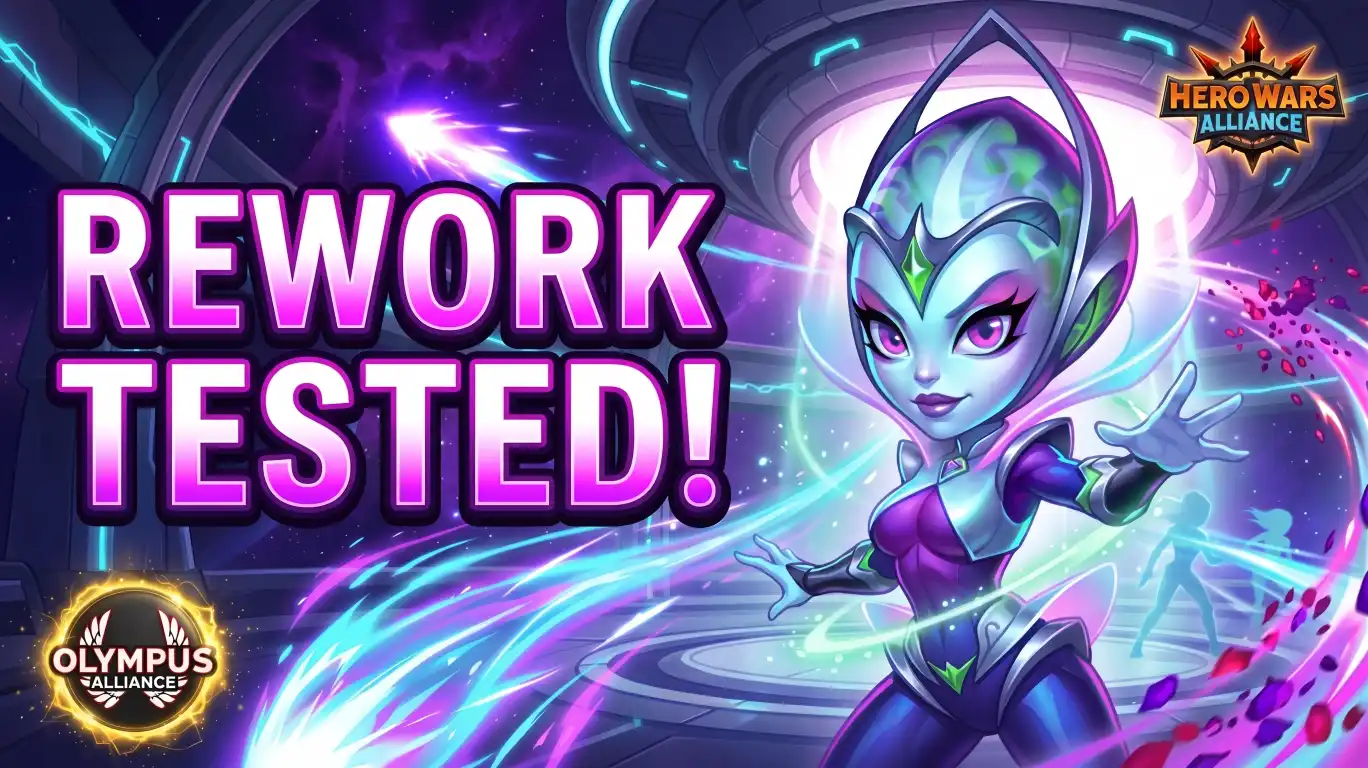
Disharmony: The Skill That Got Us Excited
Now we reach Disharmony — the skill that genuinely got our attention the first time we saw this rework. Nebula boosts her own Movement Speed and Skill Recharge Speed, along with any allies positioned behind her, by 25% for five seconds.
That alone opens up real team-building questions. Which hero do you tuck in behind Nebula? Who suddenly becomes terrifying when their cooldowns tick 25% faster? Those are exactly the combinations worth experimenting with.
The Damage Over Time Block: Not What We Hoped
Here’s the part that lit us up: during those five seconds, Nebula also blocks incoming Damage Over Time. For a moment we imagined permanent DoT immunity for the heroes standing behind her, which would have reshaped the entire battlefield. Unfortunately, after testing, that protection is capped at the same five seconds as the rest of the skill.
To be clear, five seconds in Hero Wars: Alliance can be enormous, and hitting that window at the perfect moment can swing an entire fight. Against Damage Over Time specifically, though, five seconds is tighter than we first hoped.
Everyone jumps straight to Iris when DoT comes up, yet she’s far from the only reason this matters. Tempus applies it too, and so does Polaris — whose Pulsing Comet can deal Magic Damage every half-second for up to six seconds while also landing a stun, and Polaris stays active throughout the battle. Stack a few of those effects together and the pressure barely lets up. Nebula gives you a clean five-second shield against that incoming damage, but once the window closes, the pain resumes.
So Disharmony is still an excellent skill. The 25% Movement Speed and Skill Recharge Speed paired with a temporary DoT block absolutely earns its place — it simply isn’t the permanent counter we briefly dreamed about.
Equilibrium: Attack Buffs in Support Mode
The last piece of Nebula new skills explained is Equilibrium, which transforms her basic attacks into Support mode. Whenever it triggers, Nebula raises the Physical Attack and Magical Attack of one nearby ally for five seconds.
In the example shown, that’s a temporary boost of 98,601 Physical Attack and 155,402 Magical Attack, both scaling with Nebula’s Physical Attack. And just like her other abilities, positioning drives the payoff: if only one ally stands nearby, Nebula alternates Equilibrium between that ally and herself.
Because so much of her kit now keys off where your heroes stand, Equilibrium turns Nebula into a positioning puzzle — in the best possible way.
Nebula New Skills Explained: Our Verdict
Put it all together and Nebula looks like a genuinely exciting support to build a roster around. She manipulates Energy through Astral Projection, heals and cleanses with Serenity, accelerates the heroes behind her while briefly shielding them from Damage Over Time via Disharmony, and hands out huge Physical or Magical Attack boosts through Equilibrium.
Overall, we really like this rework. Our only slight disappointment was Disharmony — had that Damage Over Time protection been permanent, we’d be talking about a completely different level of impact against the strongest DoT comps in the game. Instead, we get a five-second tactical window that is still powerful and still useful, so the real challenge now is learning to exploit those seconds at exactly the right moment. That’s the Nebula new skills explained in full — and it’s what we’ll keep testing.
Keep Reading
Want to test Nebula comps with players who actually theorycraft this stuff?