
Strongest Defense Team Breakdown 2026 | HW Alliance


This Strongest Defense Team Breakdown takes a different route from the usual “here are three teams, go copy them” format. That copy-paste habit is exactly where most Guardians slip up: they grab a team from YouTube, drop it straight into Cross Server, and simply hope for the best. However, great defenses are never built that way, because there is no unbeatable team and every defense can eventually be broken. Therefore, the real objective isn’t becoming impossible to defeat. Instead, it’s making your opponent think.
What This Strongest Defense Team Breakdown Is Really About
Every good Strongest Defense Team Breakdown starts from the same premise: a strong defense forces your opponent to train, to pull out heroes they never wanted to touch, and to waste counters on one team only to realize those heroes are gone when the next team appears. That, ultimately, is where Cross Server is won — not through raw power, but through planning, psychology, and a clear understanding of what your opponent actually needs to beat you. With that mindset in place, here are the three defensive cores that, in my opinion, currently define Hero Wars: Alliance. Everything else is built around them.
Core Number One — Satori
Let’s start with Satori, because he never really stopped being dangerous. Most players fixate on his burst damage, yet that isn’t what makes him terrifying on defense. The real weapon is uncertainty. His Fox Marks are wildly unpredictable — sometimes they explode immediately, sometimes they shove the opponent into awkward situations, and sometimes they completely rewrite the rhythm of the fight. As a result, when Satori is properly supported, he becomes an absolute nightmare.
The support layer is where this core truly comes alive. Lian makes approaching him far harder thanks to additional control, while Somna weakens physical attackers by reducing Armor Penetration and Physical Attack, so the frontline becomes significantly tougher to break. Meanwhile, Miu continuously disrupts the opposing team, buying Satori the time he needs to survive long enough to detonate his Marks. Cascade then adds even more pressure and makes enemy mistakes far more punishing, whereas Folio dramatically increases the team’s overall damage output.
Then come the supports that push everything over the edge. Byrna provides constant healing while permanently increasing Maximum Health, which lets Satori’s team survive longer and keep building pressure. Alvanor, on the other hand, brings protection that can completely flip the outcome of explosive fights. Suddenly a battle that looked fully under control disappears in just a few seconds. That’s exactly why Satori remains such an incredible defensive hero — not because he’s impossible to counter, but because the opponent never feels completely comfortable fighting him.
Core Number Two — Tempus and Iris
Next we arrive at what is probably one of the strongest defensive combinations in today’s meta. Separately, Tempus and Iris are already fantastic heroes; together, they tell a completely different story. Tempus constantly drags down the pace of the battle — less speed, less Energy, less momentum — and every second he buys, Iris converts into damage.
And Iris, well, everyone already knows what she’s capable of right now. Ever since Damage over Time became one of the strongest mechanics in the game, her output keeps climbing while Tempus delays everything around her. Consequently, the defense feels incredibly oppressive. Can you counter it? Of course — every team has counters. However, here’s the catch: sometimes those counters are the exact same heroes you already needed to beat one of your other defensive teams. Now your opponent faces a genuine dilemma, because they must decide whether to spend those heroes against Satori or save them for Iris. That’s precisely the pressure you want to create, since Cross Server is never played with one team — it’s played with three, and resource management matters just as much as power.
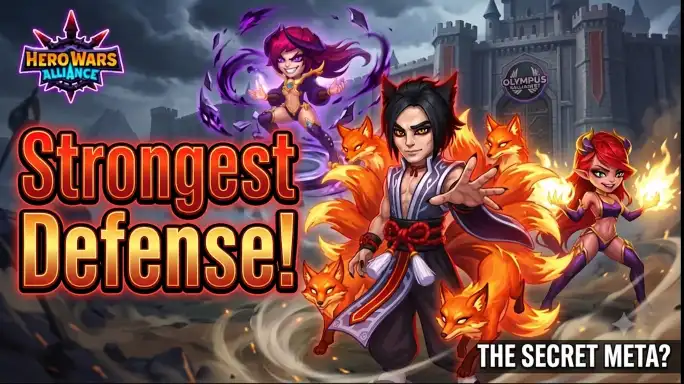
Core Number Three — Kendle, Phobos and Dorian
Finally, we reach the trio that continues to impress me every single time I test it: Kendle, Phobos, and Dorian. These three work together beautifully. Dorian constantly keeps the team alive, since his Vampirism lets everyone around him survive far longer than they should. Phobos, meanwhile, instantly becomes a nightmare for heavy magic teams — he shuts down powerful mages, burns Energy, and applies control, completely dismantling enemy strategies. Then, while all of that unfolds, Kendle quietly sets up the final blow.
Her Pure Damage, and especially her Critical Pure Damage, simply deletes heroes. It doesn’t matter how much Armor or Magic Defense they stack, because once Kendle starts landing those critical hits, heroes just disappear. That’s what makes this trio so brutal to attack, since you can’t afford to focus on only one threat. Ignore Dorian and the team refuses to die; ignore Phobos and your mage never gets to play; ignore Kendle and one of your heroes vanishes on the spot.
Cores, Not Fixed Teams
Here’s the part many players misunderstand: these aren’t rigid, locked-in teams. They’re cores, and around each core you adapt. For example, your second team might run Yasmine, Soleil, and Octavia, or your account might simply perform better with different combinations. So test them, train them, and see what actually clicks with your heroes.
The same flexibility applies to the third team. Maybe Byrna belongs there, or maybe you move her off the Satori core and swap in Guus instead — because Guus can hand Satori’s team the extra survivability it needs against popular Iris counters. Ultimately, there’s no single universal answer here. Your account is unique, your investments are unique, and your opponents are unique, which is exactly why training matters so much.
| Defensive Core | Key Heroes | The Problem It Creates |
|---|---|---|
| Satori Core | Satori + Lian, Somna, Miu, Cascade, Folio, Byrna / Alvanor | Unpredictable Fox Mark detonations backed by heavy sustain |
| Tempus & Iris | Tempus, Iris | Relentless slow feeding escalating Damage over Time |
| Kendle Trio | Kendle, Phobos, Dorian | Vampiric survival, mage lockdown, Critical Pure Damage |
Build Three Problems, Not Three Teams
And that’s the real message of this Strongest Defense Team Breakdown. Don’t build three teams — build three problems. When your opponent opens your defense, you don’t want them thinking, “Oh, I know exactly how to beat this.” Instead, you want them muttering, “Damn, now I have to train.” If all three of your defensive teams demand completely different counters, then you’ve already won half the battle before it even begins.
Ultimately, this game has always rewarded adaptation — testing, creating new counters, finding fresh synergies, and learning from every defeat. These three cores are, in my opinion, the strongest foundations for defensive building in Hero Wars: Alliance today, and everything else is built around them. So train, experiment, move heroes between teams, challenge your guildmates, and watch your replays. Because sometimes the strongest defense isn’t the one with the highest power — it’s the one that forces your opponent to think the hardest.
More From Olympus Alliance
- 90000 Rune Stone Winner
- Pallant First Look Reveal
- Guus Twilight Skin Explained
- Elemental Shop Preparation
Want to trade defense builds, test counters, and talk meta with other Guardians? Come hang out with the community.