Umbra New Titan Guide: Darkness Tempo Control in Hero Wars Alliance

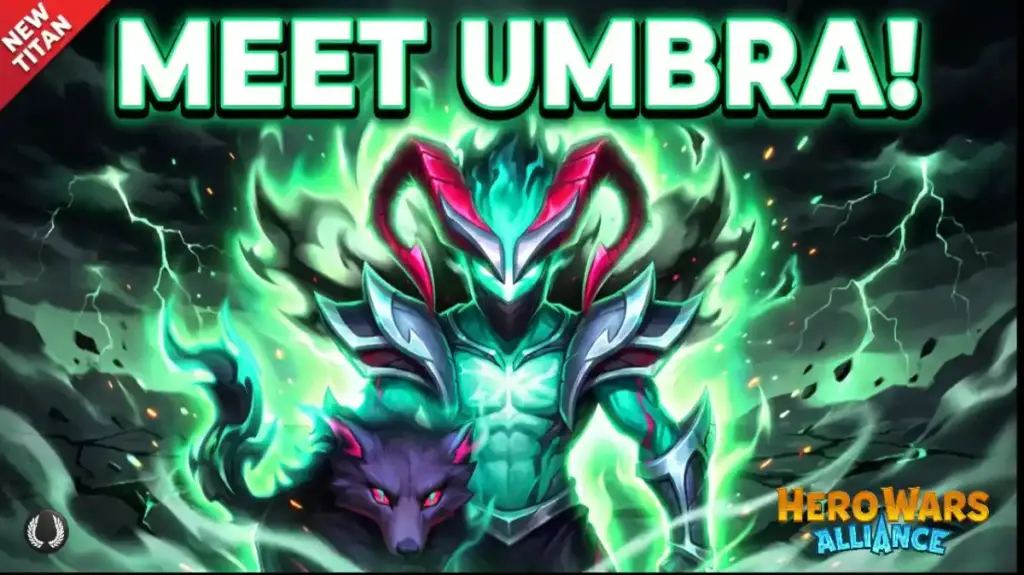
Introduction: A Darkness Titan Built to Control the Fight
The Umbra New Titan guide starts with one undeniable truth: this update demands attention.
Hero Wars Alliance is introducing a new Darkness Titan, and based on the official details available on paper, Umbra is designed with clear intent. Rather than offering subtle utility, he immediately signals disruption. Moreover, his kit focuses on tempo control, energy manipulation, and full Darkness synergy.
Umbra enters the battlefield as a Darkness Titan in the middle line with the role of Summoner. However, unlike traditional summon-focused designs, he does not simply add pressure through damage. Instead, he interferes directly with energy flow. Therefore, this guide stays disciplined and analyzes strictly what is officially revealed.
Umbra’s Identity – Role, Position, and Design Direction
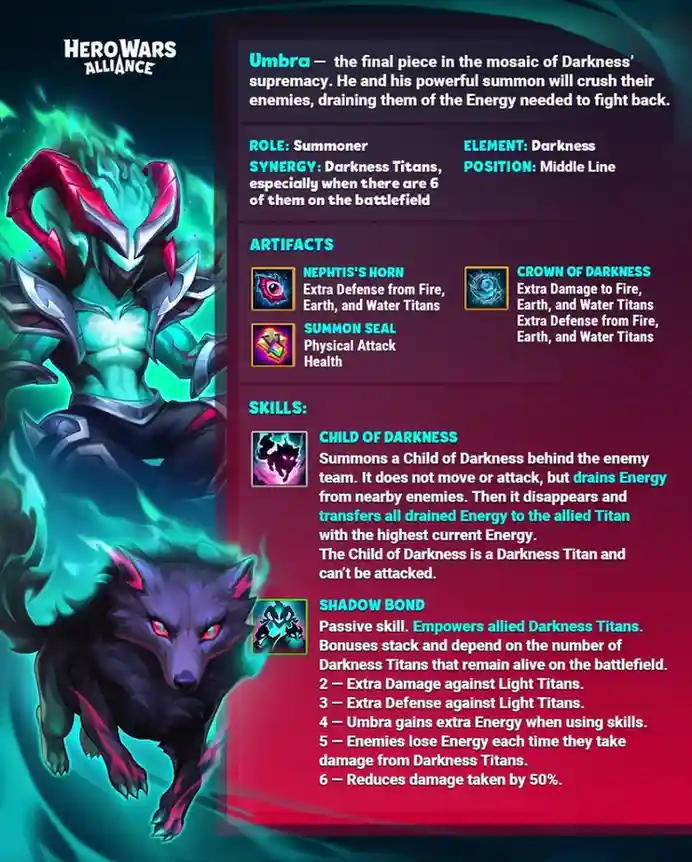
Umbra is confirmed as a middle-line Darkness Summoner. At first glance, that combination alone should make players pause. After all, Summoner Titans already influence tempo shifts during Titan battles.
However, Umbra goes further. Instead of summoning direct damage, he introduces energy control into the equation. Consequently, his presence suggests battlefield manipulation rather than straightforward offense.
From the available information, the direction is clear. Umbra strengthens Darkness synergy, pressures energy flow, and scales survivability as more Darkness Titans remain alive. Nevertheless, this remains paper analysis, and real combat testing will ultimately determine practical impact.
Importantly, this is not presented as a splash Titan. Instead, Umbra is clearly positioned as a synergy Titan.
Child of Darkness – Energy Drain as Tempo Manipulation
Umbra’s primary ability, Child of Darkness, defines his strategic identity.
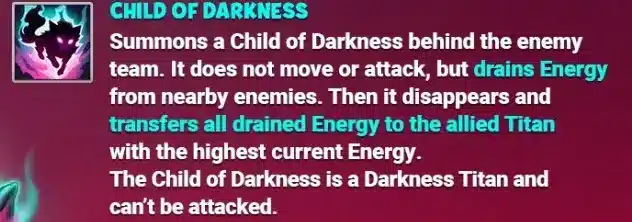
He summons a Darkness entity behind the enemy team. This entity does not move and does not attack. Instead, it drains energy from nearby enemies. After completing the drain, it disappears and transfers all collected energy to the allied Titan with the highest current energy.
In other words, Umbra removes energy from the opponent and redirects it to your most charged Titan.
That is not simply control. That is tempo manipulation.
In Titan battles, energy determines ultimate usage. Furthermore, ultimates often decide fights. Therefore, controlling energy flow directly influences match outcomes.
Additionally, the summoned entity cannot be targeted. Because of that, opponents cannot remove it through direct attacks. It will drain. It will transfer. As a result, on paper, Umbra provides reliable strategic value through guaranteed energy interaction.
However, discipline remains essential. We must evaluate how fast the energy drain feels in combat. We must measure how impactful the transfer becomes in real battles. Paper clarity does not always translate directly into battlefield dominance.
Shadow Bond – Scaling Power with Full Darkness
Umbra’s passive ability, Shadow Bond, intensifies his synergy focus.
This passive strengthens allied Darkness Titans based on how many remain alive during battle. As more Darkness Titans survive, the bonuses increase step by step.
At two Darkness Titans alive, allies gain additional damage against Light Titans.
At three, they gain additional defense against Light Titans.
Also, At four, Umbra gains extra energy when using skills.
At five, enemies lose energy each time Darkness Titans deal damage.
At six, Darkness Titans reduce incoming damage by 50 percent.
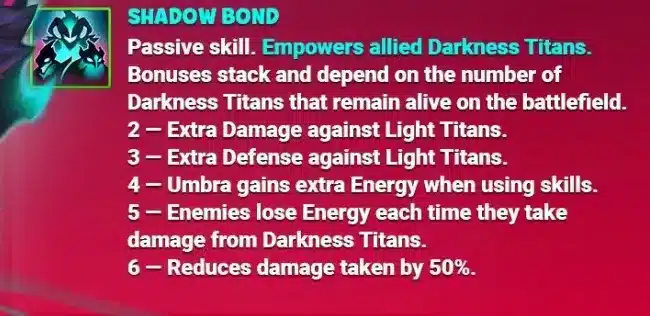
Fifty percent damage reduction.
On paper, a full Darkness lineup becomes extremely difficult to break. Moreover, the scaling clearly rewards commitment rather than partial inclusion. Therefore, Umbra’s design encourages maintaining a full Darkness composition instead of mixing him casually into other elements.
Still, we remain disciplined. Paper analysis represents only the first step. Battlefield validation must follow.
Artifact Overview – Reinforcing the Strategic Theme
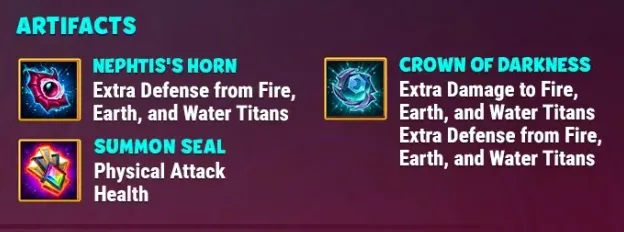
Umbra’s artifacts further support his synergy-driven structure.
Nephthys’s Horn provides additional defense against Fire, Earth, and Water Titans.
Crown of Darkness increases damage against Fire, Earth, and Water while also granting defensive bonuses.
His Summon Seal enhances Physical Attack and Health.
Consequently, the overall design direction remains consistent. Umbra improves survivability, strengthens Darkness synergy, and applies pressure across elemental matchups beyond Light. Every component aligns with a scaling, synergy-centered identity.
Testing Priorities – Discipline Before Judgment
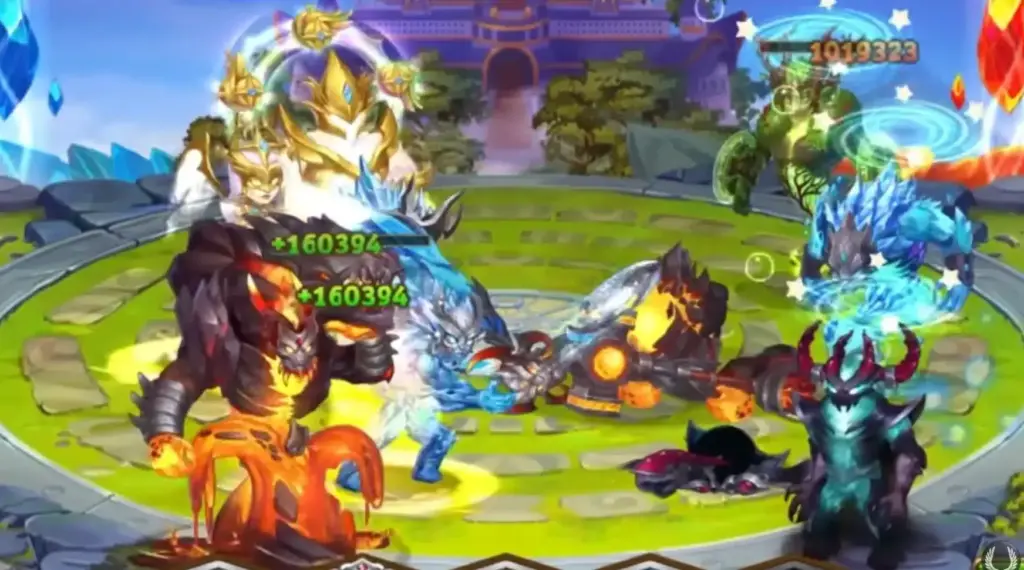
Although the paper design looks powerful, battlefield reality may differ. Therefore, structured testing becomes essential.
We need to evaluate how quickly the energy drain activates and completes.
We need to measure how impactful the transferred energy feels in practical fights.
Also, We need to determine whether running six Darkness Titans is consistently viable or situational.
We need to test hybrid builds.
We need to test defensive Umbra setups.
Moreover, we need to test aggressive Umbra scaling approaches.
Because Titans operate on timing, order, and synergy, numbers alone do not define success. Umbra clearly interacts with tempo, so testing must focus on real combat flow rather than theory.
Build Directions to Explore: Umbra New Titan guide
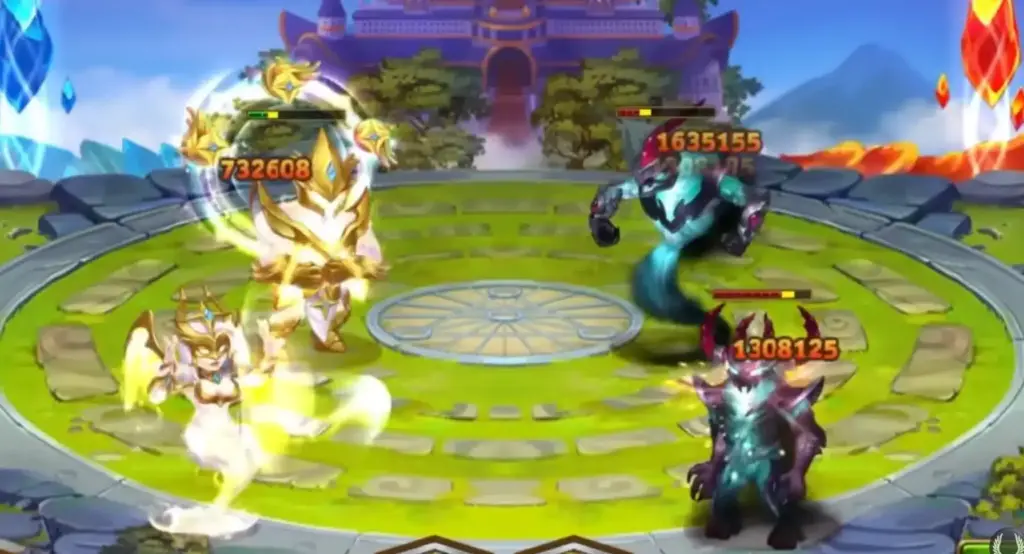
To properly evaluate Umbra, multiple development paths must be examined.
A high-health sustain build will test durability scaling within full Darkness.
A full offensive scaling build will examine pressure potential.
An energy cycling build will focus on maximizing ultimate timing manipulation.
Hybrid combinations with key Titans will test flexibility within partial Darkness structures.
Each path approaches tempo differently. Therefore, testing must remain methodical and disciplined.
Umbra New Titan guide: Can Umbra Reshape Darkness Teams?
Based strictly on the revealed information, Umbra appears designed to elevate Darkness compositions significantly.
He drains enemy energy. He transfers energy to allies. Also, He empowers Darkness Titans through progressive scaling. Moreover, he grants 50 percent damage reduction at full Darkness presence.
However, we do not overhype before testing. We do not conclude before field results. Instead, we test, measure, and adapt.
Umbra is coming to Hero Wars Alliance. The Darkness meta may be evolving. And disciplined evaluation will determine how far this Titan truly pushes the element.
Check out: Lumira Titan Guide: Efficient Offense Without High Investment
5 Fire Titans Guide: Hero Wars Alliance
5 Earth Titans Guide Hero Wars Alliance: Master Verdoc’s Earth Squad
Water Titans Guide Hero Wars Alliance: The Rising Tide Explained
Hero Wars New Season: Emerald Spirits Overview
FAQ – Umbra New Titan Guide
Umbra serves as a middle-line Darkness Summoner who focuses on energy manipulation and strengthening Darkness synergy rather than dealing direct summon damage.
Child of Darkness summons an untargetable entity that drains energy from nearby enemies and transfers it to the allied Titan with the highest current energy, directly influencing ultimate timing.
Shadow Bond grants stacking benefits based on the number of Darkness Titans alive, including extra damage and defense against Light, energy gain for Umbra, enemy energy loss when damaged, and 50 percent damage reduction at six Darkness Titans.
Based on the revealed design, Umbra functions as a synergy Titan intended to elevate full Darkness compositions rather than operate as a flexible splash addition.
Energy drain speed, energy transfer impact, full Darkness viability, hybrid builds, defensive setups, and aggressive scaling approaches must all be evaluated in real combat situations.