
Drayne Relics Guide: Full Hero Wars Alliance Breakdown

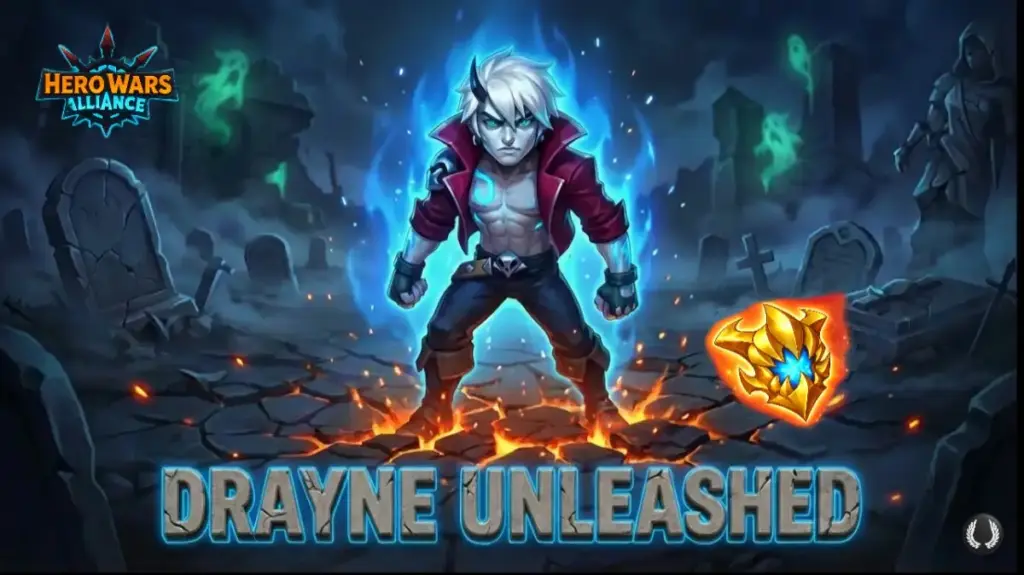
Introduction: The Moment Drayne Truly Enters the Meta
In Hero Wars: Alliance, power shifts do not always arrive with loud announcements. Sometimes, the biggest changes happen quietly, and relics are one of those moments. They are not simple stat boosts. Instead, relics define how a hero survives, how that hero scales into late game, and how dangerous that hero becomes when fully optimized.
That is exactly why Drayne’s relic release matters right now. This Drayne Relics Guide exists because relic support marks the point where theory ends and real meta potential begins. Once relics arrive, heroes stop being experiments and start becoming long-term account decisions. From that moment forward, resource allocation, build priorities, and team structure all deserve serious attention.
Drayne already showed signs of being a high-pressure, high-presence hero. However, relics determine whether he stays a strong option or evolves into a hero that forces entire teams to adapt around him. For that reason, this guide focuses strictly on what his relics do in real gameplay, real fights, and real account progression, without guessing or adding outside ideas.
Drayne’s Core Identity Before Relics
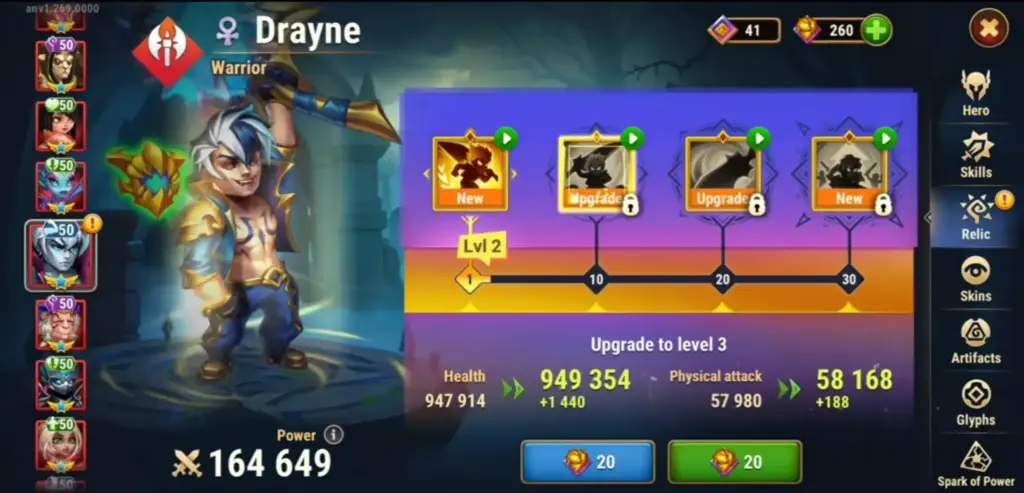
Before relics entered the picture, Drayne already leaned toward sustained pressure rather than short burst moments. He did not rely on a single explosive window. Instead, his value came from continued action and ongoing presence in fights.
With relics now available, his intended role becomes clearer. Each relic reinforces that pressure-based identity rather than changing it. This Drayne Relics Guide follows the relic order exactly to show how that identity develops step by step.
Relic One: Battle Rush Sets the Tempo

The first relic, Battle Rush, immediately shows how the developers want Drayne to function at high levels. At maximum level, every fifteen seconds, Drayne gains thirty-three percent speed for ten seconds.
At first, this may seem modest. However, speed in Hero Wars: Alliance means far more than movement. Speed controls tempo, pressure, and energy flow. It affects how often a hero attacks, how quickly abilities cycle, and how consistently passive effects trigger.
Because of this design, Battle Rush creates repeated rhythm spikes throughout combat. Every fifteen seconds, Drayne enters a long speed window. As a result, for most of the fight, he is either inside a spike or approaching the next one. This is not a short burst relic. Instead, it delivers sustained pressure by design.
In short fights, Battle Rush allows Drayne to ramp faster. In medium fights, it helps him cycle abilities more often. Also, in long fights, it turns him into a momentum engine, and momentum-based heroes are notoriously difficult to stop once they gain control.
Battle Rush: Practical Combat Impact
First, speed directly increases energy generation. More speed leads to more attacks, which leads to faster energy gain and earlier ultimate usage. If Drayne already generated energy reliably, this relic pushes him into a range where pressure cycles begin before enemies can respond. In coordinated teams, faster ultimates also trigger artifacts sooner, accelerate team buffs, and stack debuffs more quickly.
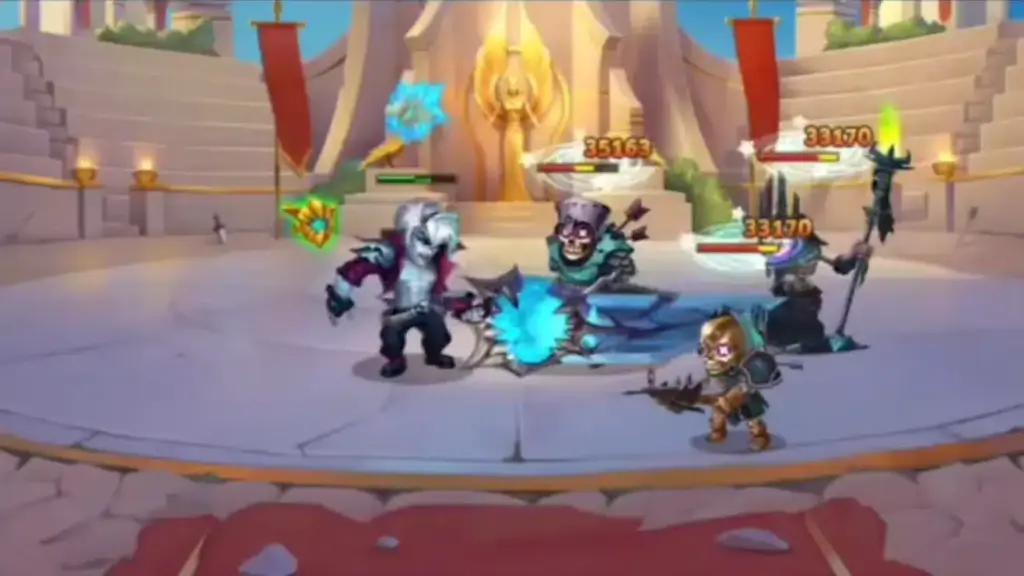
Second, Battle Rush amplifies every passive or on-hit interaction tied to attacks. Any effect that triggers from hits benefits indirectly. If Drayne applies stacks, debuffs, or bonus damage effects, this relic multiplies their impact. Because of that, relics like this age extremely well, since any future support that interacts with attack frequency naturally becomes stronger alongside Drayne.
Third, increased speed reduces dead time between actions. As a result, when control effects end, Drayne recovers tempo faster than slower heroes. Missed stuns or imperfect control chains become far more punishing for the opposing team.
Build Direction Influenced by Battle Rush: Drayne Relics Guide
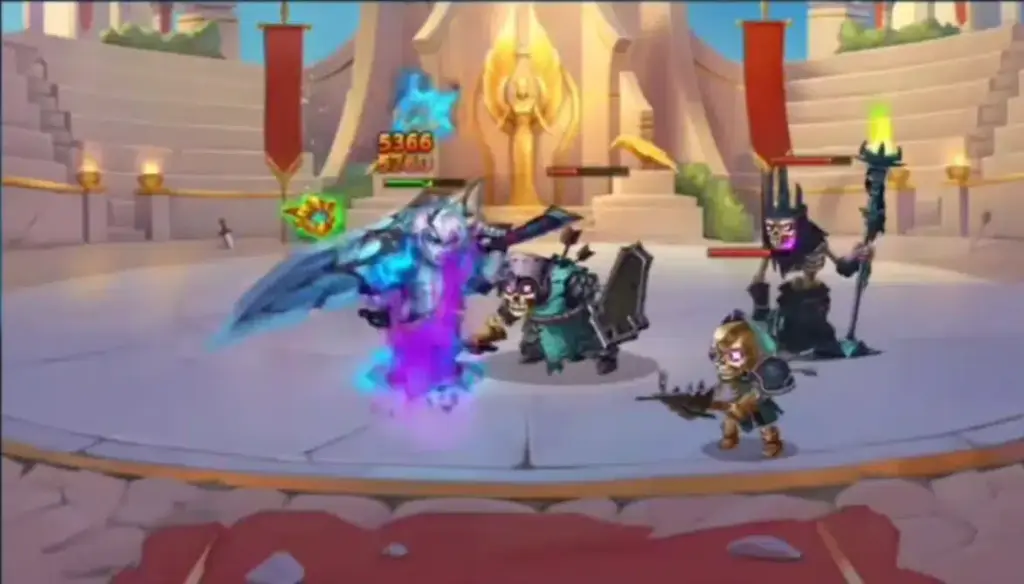
This relic does not suggest building Drayne as a pure tank. Instead, it strongly points toward a tempo carry approach. While survival still matters, constant action matters more. If Drayne stays alive but stops acting, value drops. If he continues acting without interruption, pressure snowballs.
Therefore, builds that keep Drayne active in combat while maintaining high action frequency often outperform pure survival stacking. In some situations, slightly lower raw defense paired with higher uptime can deliver better results when a hero has self-driven tempo mechanics.
Additionally, the fifteen-second timing aligns naturally with many fight phases, such as early burst moments, first ultimate rotations, and mid-fight collapses. Because the timing is structured rather than random, team planning becomes more consistent. At this point, Drayne stops being just a hero and starts functioning as a system piece.
Relic Two: Rising Tornado Legendary Upgrade
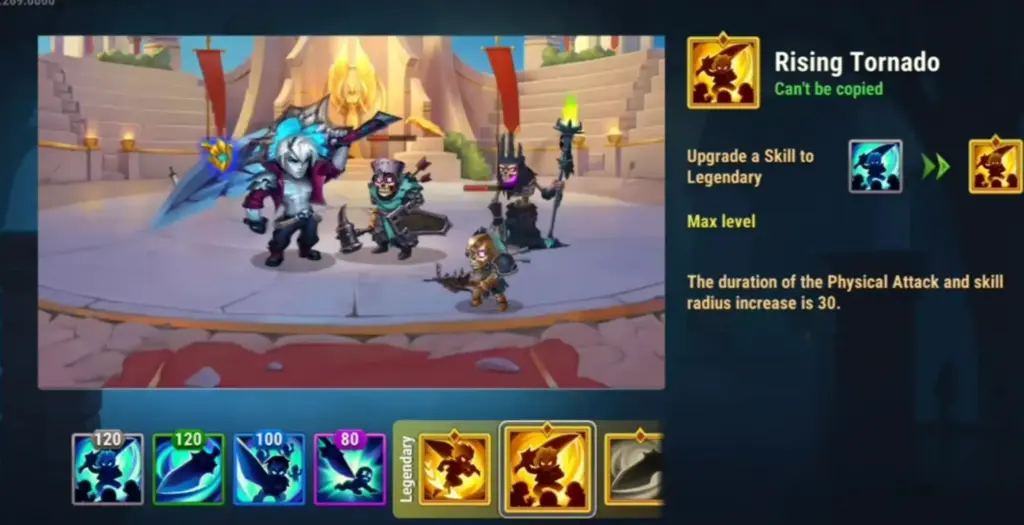
The second relic upgrades Drayne’s ultimate, Rising Tornado, and introduces a critical keyword: can’t be copied. This immediately signals that the developers view this ability as core identity power. They intentionally prevent mirror or clone interactions from duplicating it.
With the upgrade, Rising Tornado gains physical damage per hit that scales with Physical Attack. Additionally, it grants extra Physical Attack that also scales with Physical Attack. This creates double offensive scaling rather than flat bonuses. As a result, the relic becomes stronger as the build improves, making it especially valuable for late-game accounts.
Rising Tornado: Extended Empowerment Windows
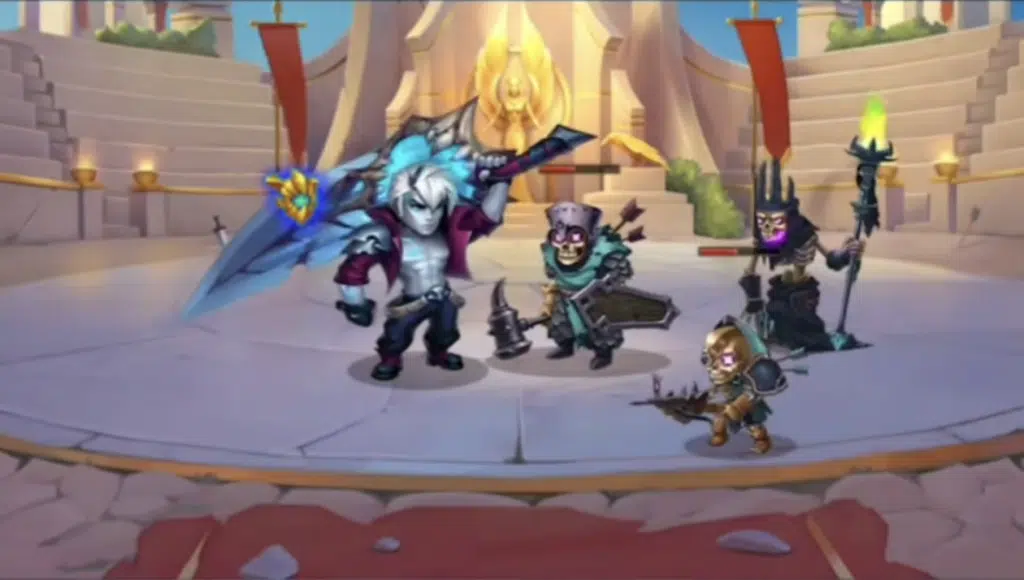
Beyond raw damage, this relic extends the duration of Drayne’s Physical Attack buff and skill radius increase. Normally, empowerment windows are brief. A hero spikes, then returns to baseline. With this relic, Drayne remains empowered for longer periods.
When these extended empowerment windows overlap with Battle Rush speed spikes, tempo stacking begins. Speed and power amplify each other, creating sustained dominance rather than isolated burst moments. This is the type of interaction that turns strong heroes into oppressive ones.
Rising Tornado: Size, Range, and Space Control
The increase in size and skill radius may appear subtle, yet it has major implications. As Drayne grows, his hitbox interaction changes, his skill reach expands, and his ability to connect with backline targets can shift based on positioning. In addition, improved space control can indirectly improve survivability.
The increased radius also strengthens multi-target pressure. This leads to better cleave value, stronger frontline breaking, and more consistent multi-target damage. Even when enemy positioning changes mid-fight, Drayne is more likely to continue landing hits.
What Rising Tornado Confirms About Drayne: Drayne Relics Guide
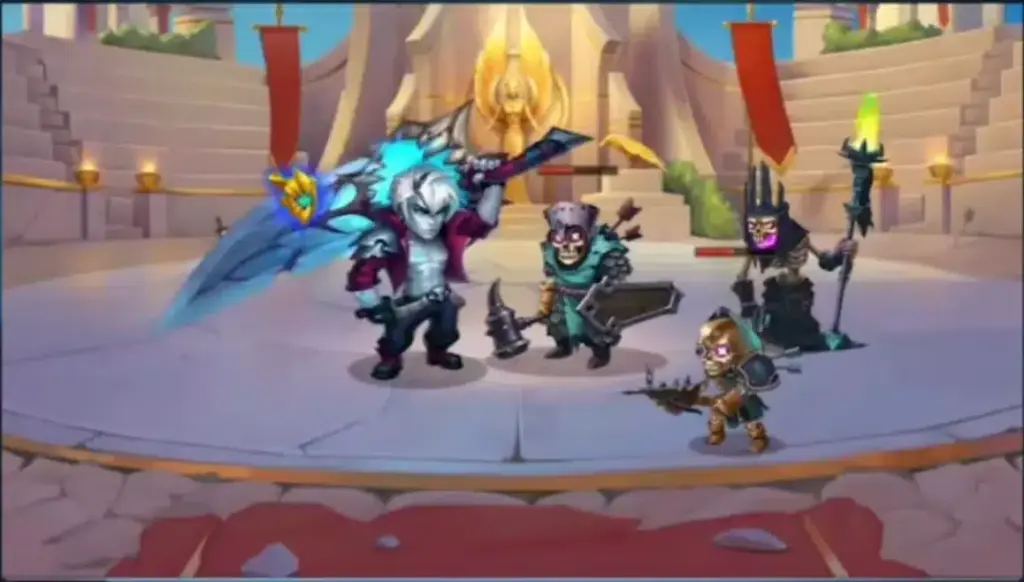
This relic confirms that Drayne is not designed as a single burst assassin. Instead, he functions as an empowered pressure carry. He enters an empowered state, stays empowered longer, attacks faster, and continuously builds momentum.
However, timing becomes more critical. Control before the ultimate delays empowerment. Early death removes relic value entirely. Because of this, protection, positioning, and timing determine whether this relic feels simply strong or truly account-defining.
Relic Three: Shatter Strike Legendary Upgrade
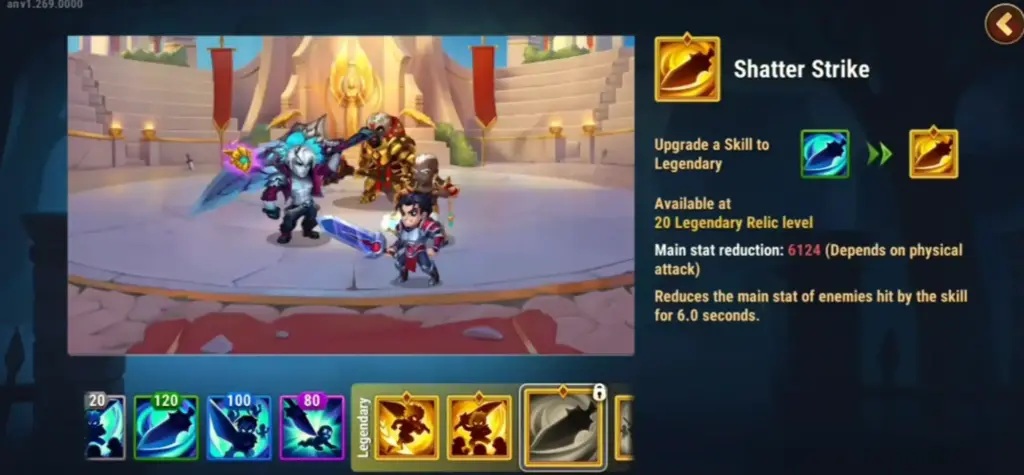
With Shatter Strike, Drayne transitions from pressure carry into team destabilizer. By default, every three basic attacks trigger damage to all nearby enemies. Importantly, this strike counts as a basic attack.
Because it counts as a basic attack, it interacts with anything tied to hits, stacks, or energy generation. When combined with Battle Rush, faster attacks lead to faster three-hit cycles, more area damage triggers, more energy gain, and increased ultimate uptime. This creates a closed-loop combat pattern.
Shatter Strike: Main Stat Reduction and Long-Fight Pressure
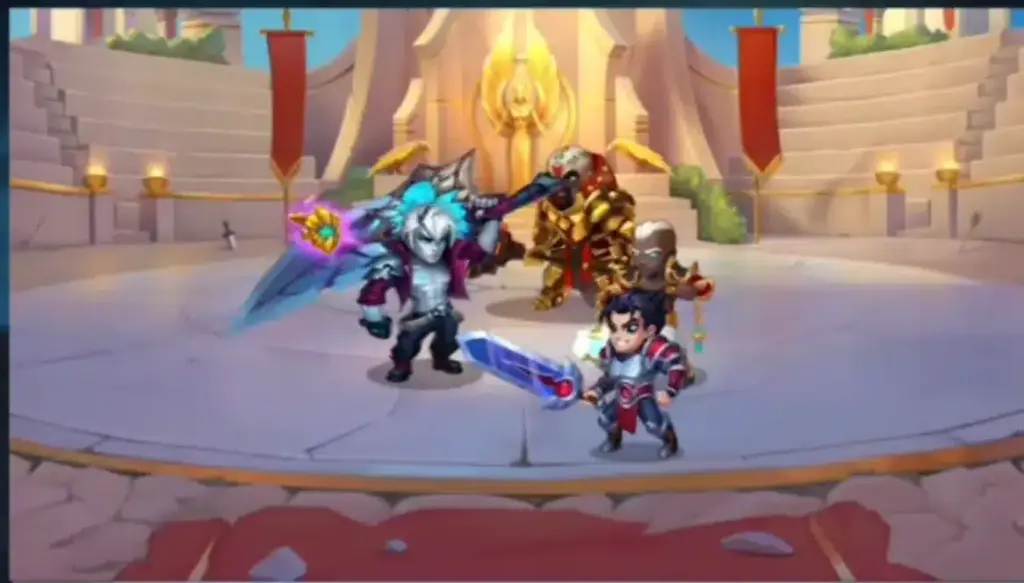
The legendary upgrade adds main stat reduction to enemies hit for six seconds. Main stat reduction is not a minor effect. Main stats influence damage scaling, survivability, and skill effectiveness.
Strength heroes lose durability scaling, agility heroes lose damage scaling, and intelligence heroes experience reduced magic output and weaker shields or healing. Because this applies universally, it pressures every role rather than targeting a single damage type.
With frequent triggers, Drayne can maintain near-constant stat suppression across multiple enemies. This is erosion, not burst, and erosion consistently decides long fights.
Shatter Strike During Empowerment: Drayne Relics Guide

When paired with Rising Tornado, Shatter Strike becomes even more oppressive. Higher Physical Attack, longer empowerment duration, and increased range allow the effect to hit more targets more often while enemies are already weakened.
This relic improves Drayne’s performance against tanks, sustain teams, scaling teams, and late-game stat-heavy compositions. While control, early deaths, or very short fights reduce its impact, it scales directly with attack speed, survivability, fight duration, and enemy stat investment. As accounts grow stronger, this relic becomes more valuable.
Relic Four: Crushing Force and Permanent Team Pressure
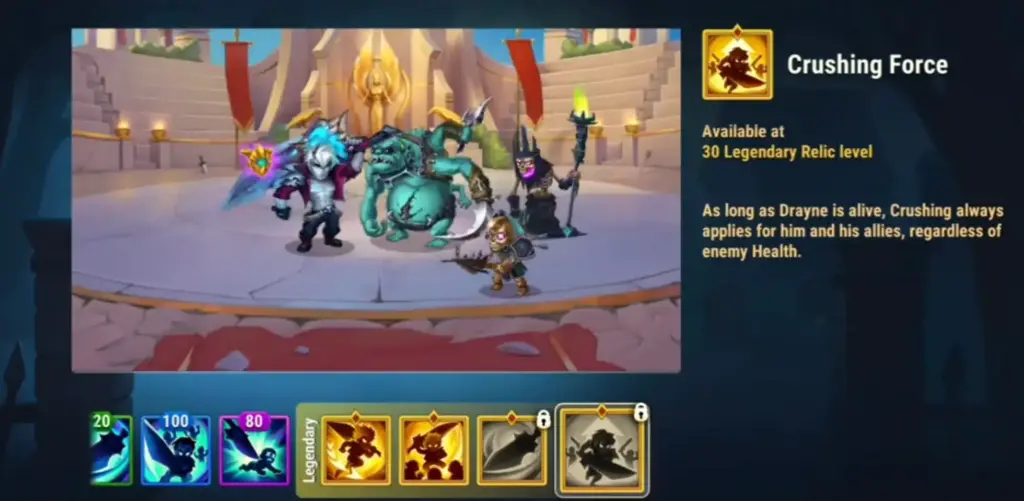
The final relic, Crushing Force, unlocks at Legendary Relic Level 30. Its effect is simple but powerful. As long as Drayne remains alive, Crushing always applies for him and his allies, regardless of enemy health.
Normally, Crushing mechanics rely on health thresholds or execution windows. This relic removes those conditions entirely. Crushing becomes permanent team-wide combat value rather than situational damage.
Crushing Force: Consistency Over Burst
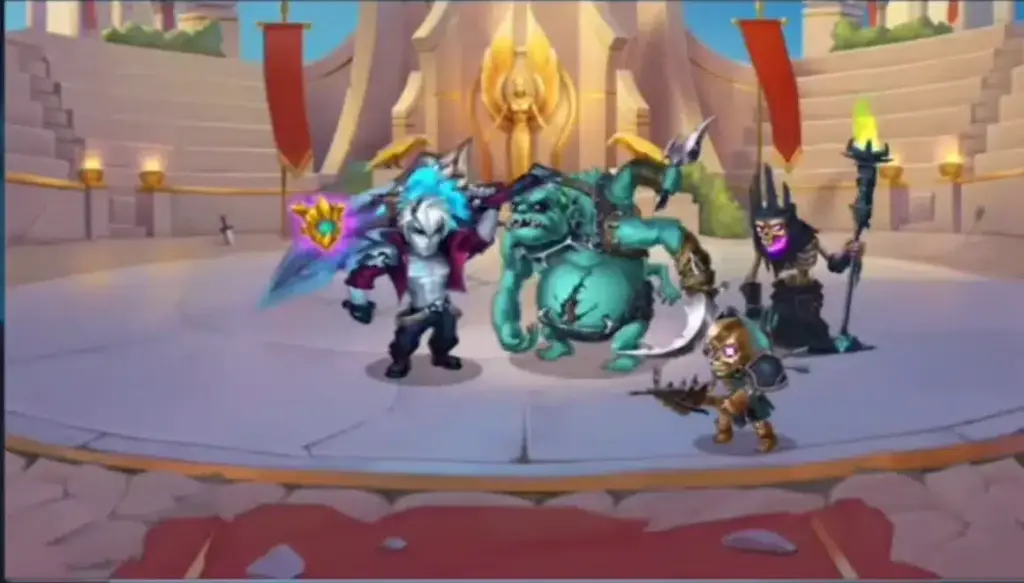
With Crushing permanently active, teams no longer wait for enemies to reach low health. They no longer rely on synchronized execution moments. Instead, effective damage output remains consistently higher throughout the entire fight.
When combined with Drayne’s speed tempo, extended empowerment, and constant enemy stat erosion, this relic completes a full combat ecosystem. Drayne accelerates himself, stays empowered longer, weakens enemy stat foundations, and permanently amplifies allied damage.
Risk, Target Priority, and Team Protection: Drayne Relics Guide
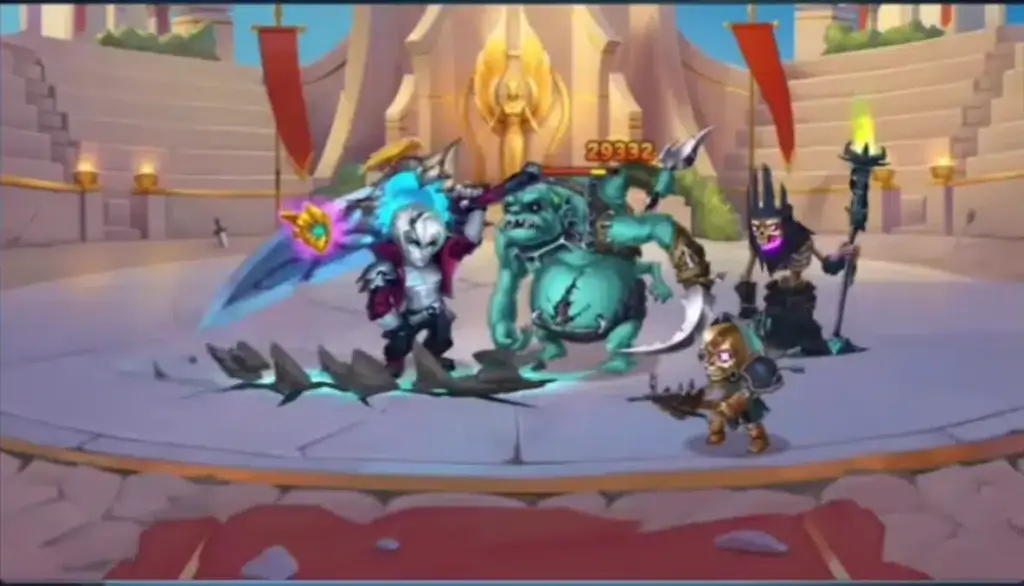
This relic also makes Drayne a priority target. If Drayne dies, the team loses permanent Crushing value. If he is heavily controlled, team damage drops. Moreover, If he is bursted early, the relic loses full impact. Because of this, protection and positioning become essential.
However, if Drayne survives, Crushing Force alone can justify building entire team structures around keeping him alive. At that point, he becomes a true meta anchor.
Final Verdict of the Drayne Relics Guide
Drayne’s relic design follows a clear and structured path. Early in fights, he ramps through speed. In mid fights, he controls tempo through empowerment. In late fights, he destroys enemy stat scaling. Throughout the entire fight, he amplifies team damage.
This is not random power distribution. It is structured dominance. Heroes built this way historically age extremely well in Hero Wars: Alliance. Drayne is not meant to be a flashy burst hero. He is designed to control fights through pressure, tempo, and team amplification.
When built correctly, protected correctly, and played around his windows correctly, Drayne has the potential to become one of the most oppressive sustained combat heroes in recent memory. This Drayne Relics Guide marks the true beginning of his era.
Check out: Drayne Ultimate Guide: Mastering Frontline Pressure in Hero Wars Alliance
Drayne Top 5 Teams in Hero Wars Alliance: Complete Strategy Breakdown
Hero Wars Drayne Brawls: Unlock Maximum Power in Alliance Fights
Best Drayne Brawls Team: Full Hero Wars Alliance Guide
FAQs – Drayne Relics Guide
They define his scaling, pressure application, and team amplification rather than providing simple stat increases.
Battle Rush establishes repeated speed windows that drive tempo, energy generation, and sustained pressure.
It prevents mirror and clone abuse, signaling that the ability’s scaling and empowerment are intentionally powerful.
Its main stat reduction creates constant erosion, weakening damage, survivability, and scaling across the enemy team.
It removes health-based conditions and provides permanent team-wide Crushing as long as Drayne remains alive.